
Why Friendship Drama Hits Tween Girls So Hard by Age 12
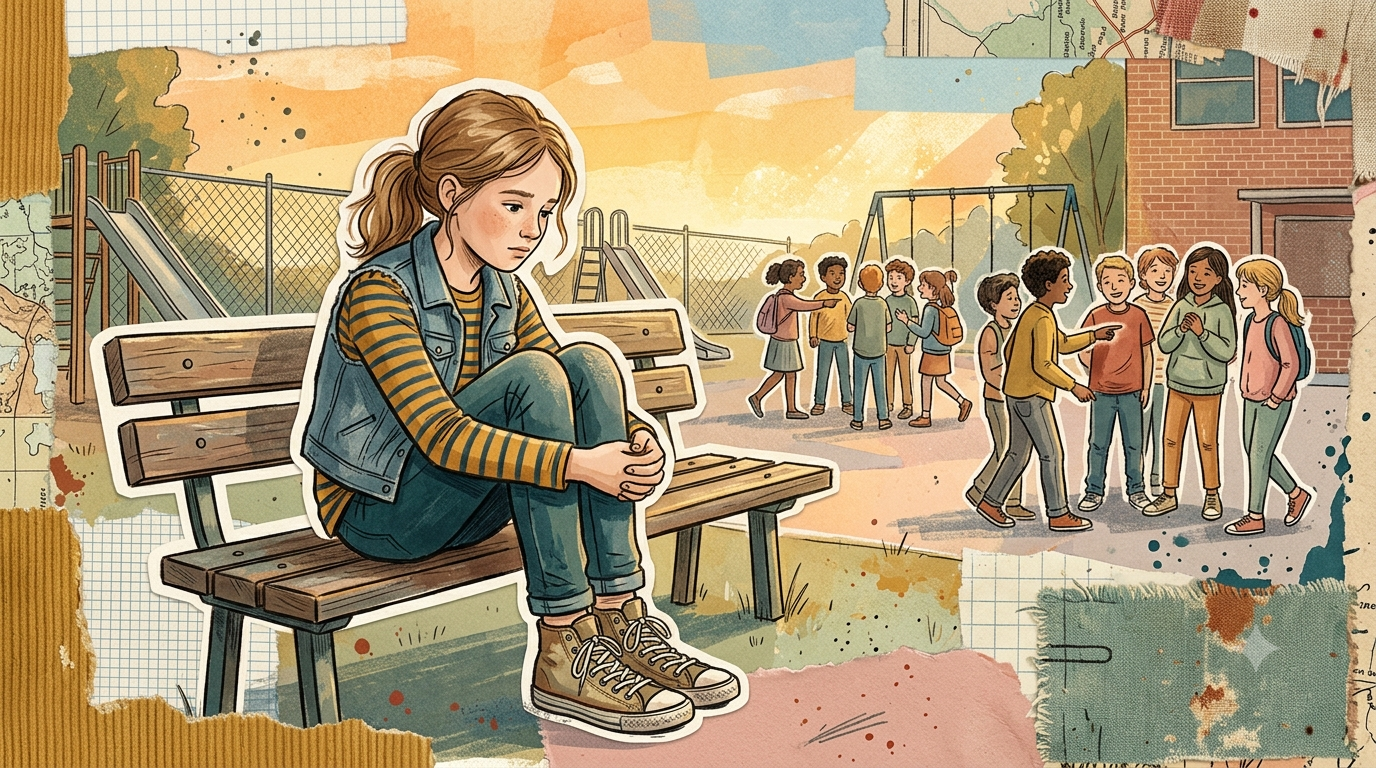
My daughter came home from school last spring and went straight to her room without saying a word. When I finally got the story, it wasn't a fight, not exactly. Her friend group had made plans for a sleepover in a group chat and quietly left her out of it, not with cruelty, just an oversight that felt, to her, like a verdict.
I wanted to tell her it wasn't a big deal. I stopped myself, because to her, it was.
The Number Behind What Parents Are Watching Happen
Research on childhood stress points to something specific: a large majority of girls report experiencing significant, sustained stress from peer relationships by the time they're twelve. Some studies put the figure as high as three out of four. The exact number moves depending on the study, but the pattern parents describe is consistent: friendship conflict at this age isn't a passing mood, it's a stress load that shows up in sleep, appetite, and how she talks about herself.
Parents often read this as girls being dramatic. It's closer to the opposite. At this age, friendship is doing double duty as both social life and identity confirmation. When it goes sideways, she's not just losing a friend for an afternoon. She's losing a source of evidence that she's likable, included, and safe in the group she's built her sense of belonging around.
Why Girls Feel This More Than It Looks Like They Should
Boys' friend conflicts at this age tend to be loud and short, a disagreement, a blowup, then back to normal within the hour. Girls' friend conflicts tend to be quiet and long, an exclusion, a shift in tone, a group chat that goes silent at the wrong moment. The quiet kind is harder to name and harder to resolve, because there's no single event to point to and no adult referee to call.
That ambiguity is what makes it toxic in a way loud conflict usually isn't. She can't always tell if she's overreacting or under-reacting, because nothing definite happened. She's left running the scenario over and over, trying to locate the exact moment she did something wrong, when often nothing wrong happened at all, just a shift in group dynamics she has no control over.
What This Actually Looks Like at Home
It rarely comes to you as "I'm stressed about my friends." It comes as stomachaches on school mornings, sudden reluctance to go to a sleepover she was excited about last week, or long silences after checking her phone. She might snap at a sibling over nothing, because the nothing is standing in for something she doesn't have words for yet.
If you wait for her to name the stress directly, you'll usually wait too long. The behavior shows up first.

What Doesn't Help
Telling her the friend group doesn't matter, or that she'll make new friends, dismisses the actual stakes of the moment for her. It matters intensely right now, and telling her it shouldn't just adds "you're wrong to feel this way" on top of what she's already carrying.
Trying to fix the friendship directly, texting the other mom, showing up at pickup to sort it out, usually backfires too. It removes her chance to practice the skill she actually needs: tolerating an uncomfortable social situation without it destroying her sense of self.
What Actually Helps
Name the specific situation back to her without minimizing it: "It sounds like being left off that chat felt like being told you don't matter to them." Let her correct you if that's not quite right. Naming it accurately, even if it's hard to hear, usually brings visible relief, because now the feeling has a shape instead of just weight.
Separate the event from her worth. "They left you off a plan" is a fact. "That means something's wrong with me" is the interpretation she's probably making underneath, and it's the part worth addressing directly. Ask her plainly: "Do you think that's true, or does it just feel true right now?"
Teach her that friendship groups at this age shift constantly, and that a shift isn't always a rejection. Sometimes it's just two other girls having a moment that has nothing to do with her. She doesn't need to be included in every plan to be secure in the friendship overall.

The Long Game
The girls who come through these years with their confidence intact aren't the ones who never experience friendship stress. They're the ones who learned, with help, that a bad week with friends doesn't have to become a verdict on who they are. That skill gets built in exactly these small, painful moments, not around them.
I want to help girls stay connected to themselves even when the group around them shifts. That's the actual work behind every quiet, hard afternoon like the one my daughter had.