
Why Some Girls Become People-Pleasers
From the outside, the behaviors can look remarkably similar. Both girls may be helpful. Both may be accommodating. Both may prioritize other people's needs.
The difference is what happens when their own needs conflict with someone else's expectations.
A kind girl may choose to help because she wants to.
A people-pleasing girl may feel as though she has no choice.\
For many parents, this distinction becomes more noticeable during the tween years. A daughter who once seemed simply cooperative begins struggling to express preferences. She worries excessively about disappointing people. She becomes distressed when someone is upset with her. She starts taking responsibility for emotions that do not belong to her.
Parents often assume she is just exceptionally caring.
Sometimes she is.
Sometimes something more complicated is happening underneath.
Many parents describe their daughters in similar ways.
She's easygoing.
She's helpful.
She's thoughtful.
She's the child who rarely causes problems.
She wants everyone to be happy.
At first glance, these qualities seem entirely positive. In many ways, they are. Consideration, kindness, cooperation, and empathy are valuable traits. Most parents are proud to see them developing in their children.
The challenge is that there can be an important difference between kindness and people-pleasing.
Kindness comes from generosity.
People-pleasing often comes from fear.
People-Pleasing Often Begins as a Strategy
That relationships require constant flexibility.
That being liked means keeping everyone comfortable. Over time, these beliefs can become deeply ingrained.
A girl learns to scan her environment for signs of disappointment. She learns to anticipate what other people want. She becomes highly skilled at adjusting herself to meet expectations.
These abilities may look like social maturity.
In reality, they can sometimes reflect a growing discomfort with expressing her own needs.
Very few girls wake up one morning and decide they want to become people-pleasers.
More often, the behavior develops gradually because it works.
A girl notices that being agreeable earns positive reactions. Adults praise her for being helpful. Teachers appreciate her cooperation. Friends enjoy spending time with someone who rarely disagrees.
None of these responses are harmful on their own.
The challenge is that some girls begin drawing larger conclusions from these experiences.
They start believing that approval depends on accommodation.

Why the Tween Years Can Intensify the Pattern
A daughter may begin monitoring conversations carefully. She may avoid expressing opinions that differ from the group. She may agree with things she does not actually agree with because disagreement feels risky.
Parents often see the result without seeing the process.
Their daughter appears flexible.
What they do not see is how much mental energy may be going into maintaining that flexibility.
The goal is not helping girls stop caring about other people.
The goal is helping them care about themselves at the same time.
The tween years bring a dramatic increase in social awareness.
Friendships become more important. Peer relationships become more complex.
Acceptance and belonging carry greater emotional significance than they did during early childhood. As a result, many girls become increasingly attentive to social dynamics.
They notice who is included.
They notice who is excluded.
They notice what behaviors earn approval.
They notice what creates conflict.
For girls who are already sensitive to relationships, this heightened awareness can become exhausting.
The Hidden Cost of Being "The Easy One"
She may avoid asking for help.
She may hesitate to communicate needs because she worries about becoming a burden.
Parents sometimes discover this pattern when a daughter suddenly becomes overwhelmed.
The surprise is not that she is struggling.
The surprise is that nobody realized she was struggling at all.
Many people-pleasing girls become highly skilled at managing other people's comfort while quietly neglecting their own.
Many people-pleasing girls receive positive feedback for their behavior.
They are often described as mature, thoughtful, cooperative, and considerate.
Those qualities can be genuine strengths.
The difficulty is that girls sometimes begin believing those strengths are the reason people value them.
If a daughter concludes that being easygoing is what makes her lovable, she may become reluctant to show parts of herself that feel less convenient.
She may hide frustration.
She may suppress disappointment.
When Approval Becomes a Source of Security
It means they are placing tremendous importance on other people's responses.
The problem is that approval is unpredictable.
No matter how accommodating a girl becomes, she cannot control every reaction, every friendship, or every opinion.
When confidence depends heavily on approval, emotional stability becomes difficult to maintain.
There will always be moments when someone is disappointed, disagrees, or responds negatively.
Girls need opportunities to learn that those experiences are uncomfortable without being catastrophic.
One of the most important things parents can understand about people-pleasing is that it is often connected to security.
Approval feels safe.
Conflict feels threatening.
Disagreement feels risky.
For some girls, maintaining positive relationships becomes so important that they start organizing their behavior around avoiding negative reactions.
This does not mean they are weak.
It does not mean they lack confidence.
Helping Girls Develop Healthy Boundaries
This can be a difficult lesson for girls who are accustomed to prioritizing harmony above everything else.
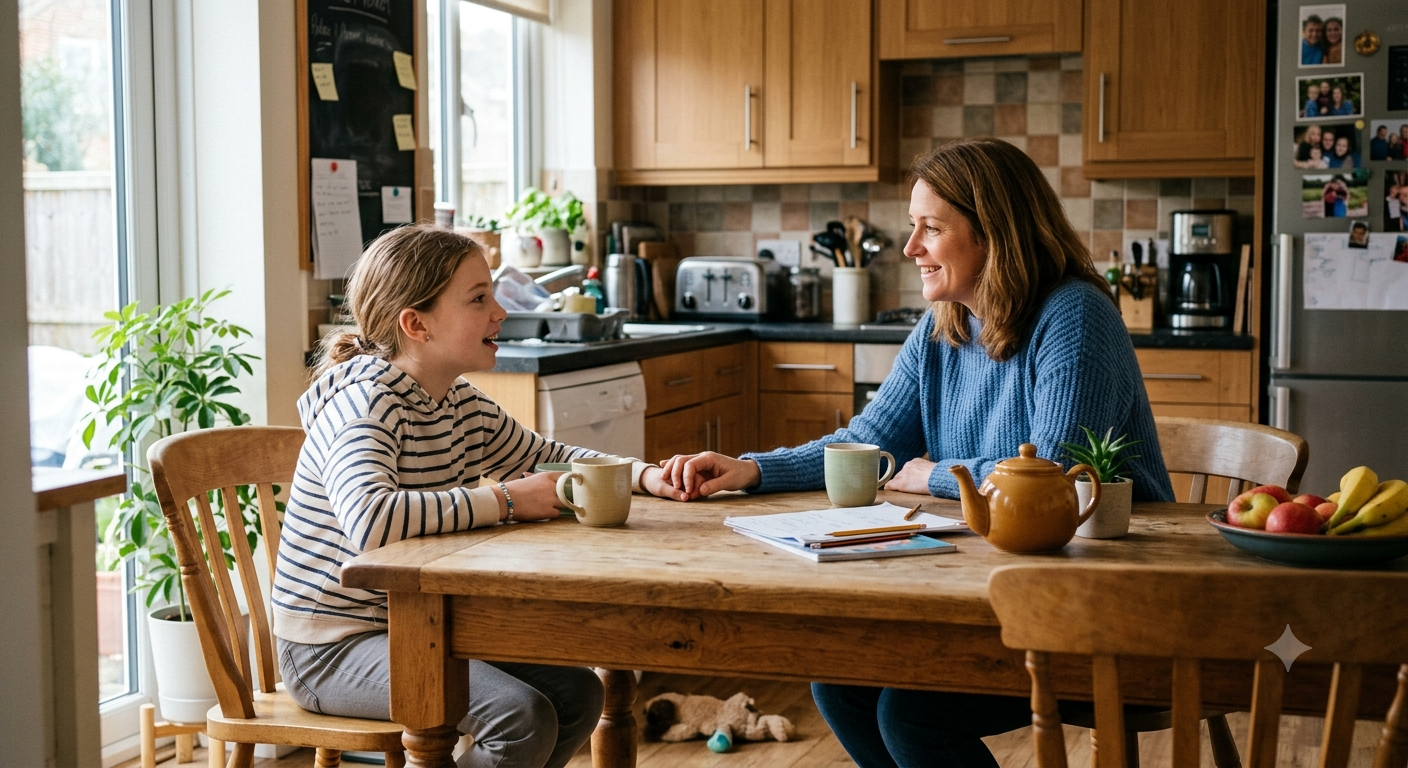
Parents can help by paying attention to everyday interactions.
Does a daughter feel comfortable expressing disagreement?
Can she identify her preferences?
Does she believe she has the right to change her mind?
These small moments often reveal how comfortable she feels advocating for herself.
Parents often worry that encouraging boundaries will make their daughters less kind.
In practice, the opposite is often true.
Healthy boundaries allow kindness to remain genuine.
When girls believe they can say no occasionally, their yes becomes more meaningful. When they feel free to express preferences, cooperation becomes a choice rather than an obligation.
Boundaries are not about becoming selfish.
They are about recognizing that other people's needs and feelings matter without assuming they matter more.
What Parents Model Matters
Parents who demonstrate balance show something different.
They show that kindness and self-respect can exist together.
That lesson becomes increasingly important as girls move through adolescence and encounter more complex friendships and social situations.
Children learn a great deal about relationships by observing adults.
A daughter notices whether her parents express opinions respectfully. She notices whether they set boundaries. She notices whether they apologize when necessary without taking responsibility for everything.
She also notices how adults talk about their own needs.
Parents who constantly neglect themselves in the service of others may unintentionally communicate that self-sacrifice is the price of love.

Raising Girls Who Can Be Kind Without Losing Themselves
Girls who learn these skills are often able to maintain something important as they grow older.
Their kindness remains intact.
But it is no longer driven by fear.
Instead, it becomes a reflection of who they are rather than a strategy for earning acceptance.
That difference may be subtle from the outside.
Inside, it changes everything.
Most parents want their daughters to be compassionate.
They want them to care about other people.
They want them to build strong relationships.
Those goals do not need to change.
The opportunity is helping girls understand that healthy relationships require more than accommodation.
They require honesty.
They require self-respect.
They require the ability to communicate needs, tolerate disagreement, and remain connected to oneself even when approval is uncertain.
