Resilience Is a Skill, Not a Trait.
Many parents admire children who seem to bounce back quickly from disappointment and assume resilience is simply part of their personality. But resilience isn't something girls are born with—it's something they learn over time. Every missed goal, friendship conflict, or disappointing grade becomes an opportunity to practice recovering, adapting, and moving forward. Understanding how resilience is built can help parents support their daughters in ways that strengthen confidence rather than shield them from every challenge. This reflects the article's core message that resilience is developed through repeated, manageable setbacks with supportive guidance.
Resilience Is a Skill Your Daughter Can Build, Not a Trait She Either Has or Doesn't
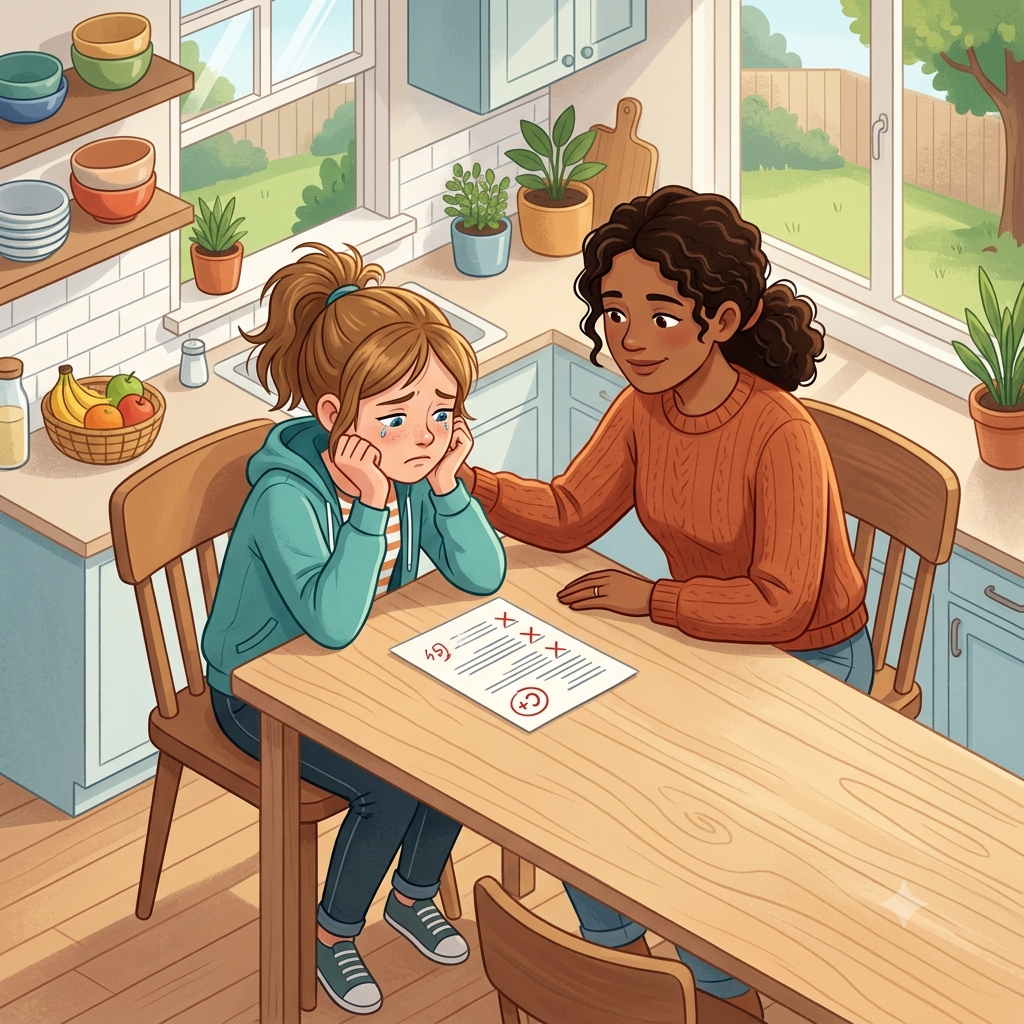
My daughter failed a spelling test she'd studied hard for. Her first reaction was to declare she was bad at spelling, full stop, and refuse to study for the next one. I used to think some kids just bounce back and others don't, that resilience was something you were handed at birth like eye color. That's not what I've seen since. Resilience showed up in her the same way any other skill does: badly at first, then better, once she had practice and a specific way to think about the setback.
The Trait Myth and Why It's a Problem
Calling resilience a trait sounds harmless, even complimentary, when you say it about a kid who bounces back easily. The problem is what it implies about the kid who doesn't. If resilience is just something some girls have, then a girl who falls apart after a bad grade or a friend fight is left with the message that she's simply missing a quality other girls come with standard. That's not just inaccurate, it's discouraging in a way that makes the actual skill harder to build.
Resilience is closer to a muscle than a trait. It gets built through specific repeated exposure to manageable setbacks, with someone helping name what happened along the way. Girls who look naturally resilient usually had more practice at this, earlier, often without anyone noticing it was happening.
What Resilience Actually Is, Behaviorally
Resilience isn't the absence of a hard reaction. It's the ability to have the hard reaction, let it move through, and get back to functioning without the setback rewriting her whole sense of herself. A resilient response to a failed test still includes disappointment. It just doesn't include "I am bad at this forever" as the permanent conclusion.
The skill has three parts: noticing the setback without immediately catastrophizing it, tolerating the discomfort of the reaction instead of numbing or exploding, and returning to action afterward instead of staying stuck. Each part can be practiced separately, and each part gets easier with reps.
Why the Tween Years Are the Training Ground
Ages 8 to 12 hand her a steady stream of manageable setbacks: a bad grade, a friend conflict, a team she didn't make, a performance that didn't go the way she pictured. None of these are catastrophic on their own. That's exactly what makes them useful. She needs setbacks small enough to survive and repeat often enough to build the pattern before the stakes get higher in her teens.
If you remove every setback for her now, smoothing over the bad grade with an appeal to the teacher, fixing every friend conflict yourself, you're not protecting her resilience. You're removing her only chance to practice it while the cost of failure is still low.
What Gets in the Way
Two things usually block this skill from developing. The first is rescuing her from every hard moment before she has a chance to sit in it.
The second is the opposite: dismissing the hard moment too fast, telling her to get over it before she's had a chance to actually feel it. Resilience requires the middle path, letting the feeling happen, then helping her move through it, rather than around it or skipping it.
What Actually Builds the Skill
After a setback, resist the urge to fix it immediately. Let her sit with the disappointment for a beat before you say anything. Then name what happened without softening it: "You studied and still got a bad grade. That's genuinely frustrating."
Once she's had the feeling, help her separate the event from her identity. "I failed this test" is a fact. "I'm bad at spelling" is a conclusion, and it's the wrong one, built from a single data point.
Ask her directly: "Does one test tell you that, or does it just feel that way right now?"
Then help her identify one specific next action, not a vague pep talk, but something concrete: rewriting the missed words five times, asking the teacher one specific question, trying a different study method next week. The action matters because it's what teaches her nervous system that a setback is followed by movement, not collapse.
The Long-Term Payoff
None of this happens in one conversation. It happens across dozens of small setbacks handled the same calm way, until the pattern is hers rather than something you have to prompt each time. By the time she's a teenager facing bigger stakes, first heartbreak, a harder class, a friendship that actually ends, she'll have years of practice at this exact skill behind her.
I want to help girls hold onto themselves through the setbacks that are coming either way. Resilience is how that actually gets built, one manageable failure at a time.