
When Your Daughter is the One Doing the Excluding
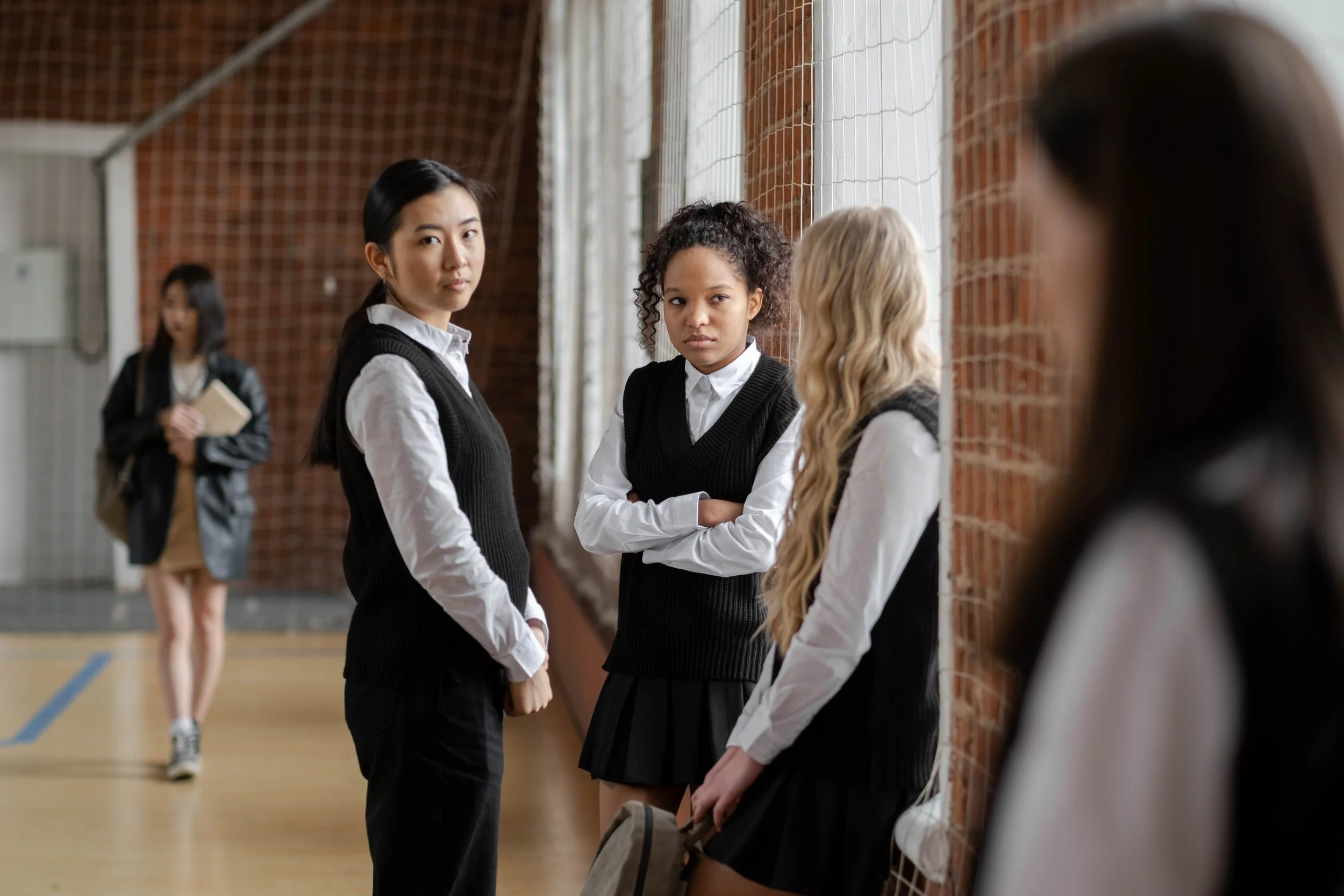
We spend so much time preparing our daughters for the pain of being left out that we often fail to prepare them for a much more uncomfortable reality: what to do when they are the ones doing the excluding.
It is a jarring moment for any parent. You believe your daughter is kind, empathetic, and inclusive. Then, you overhear her talking about a group chat she created to exclude a classmate, or you find out she was part of a clique that made a conscious decision to leave someone out of a weekend plan. Your immediate instinct might be shame, anger, or a desperate need to "fix" her character immediately.
But before you launch into a lecture on kindness, stop. The "Mean Girl" label is rarely accurate for a tween. What you are witnessing is a complex social experiment, and it is a critical moment for you to step in as a mentor, not a judge.
Why "Nice Girls" Exclude Others
It is a paradox: a girl who is kind at home can be exclusionary at school. Why? Because middle school social dynamics are driven by a desperate, biological need for belonging.
For many girls, the fear of being the outsider is so intense that they will go to extreme lengths to ensure they are on the "inside." Exclusion is often not about hating the person being left out; it is about reinforcing the boundaries of the group. It is a way of saying, "I am safe here, and we are the 'us'."
When she excludes someone, she is often seeking:
Security: If I am part of the group that decides who is "in," I am less likely to be "out."
Social Capital: Proving that she has the power to define the group’s boundaries gives her a temporary boost in social status.
Conflict Avoidance: Sometimes, a girl excludes someone because she doesn't know how to handle a personality clash, and "blocking" the person feels easier than navigating the awkward conversation.
How to Address It Without Shaming Her
If you approach this with judgment ("How could you be so mean?"), she will immediately become defensive. She will rationalize, hide, and lie to protect her social standing. Instead, you need to pull the curtain back on the behavior without attacking her character.
1. The "Perspective-Taking" Conversation
Don't focus on her behavior first; focus on the impact on the other girl. Ask:
"I heard about [Situation]. If you were in her shoes, what do you think that felt like?"
"What do you think she’s going to do tomorrow at lunch? How do you think she’ll feel when she walks past your group?"
By moving the focus to the other girl's human experience, you engage her empathy, which is likely dormant rather than absent.
2. Name the Fear
Call out the "Why." Say, "I’ve noticed that when you’re worried about your own spot in the group, it’s tempting to treat other people poorly so you feel safer. Is that what’s happening here?"
When you name the fear (the need to belong), you remove the shame from the action. You are showing her that you understand the pressure she is under, which makes her more likely to be honest with you.
3. Discuss the "Bystander vs. Upstander" Role
Exclusion rarely happens in a vacuum. Usually, one leader initiates it, and others go along to avoid being the next target. Ask her: "Do you feel like you had a choice in that moment, or were you afraid that if you stood up for her, you’d be left out too?"
This is a powerful teaching moment. It allows you to discuss the high cost of conformity and the bravery required to be an "upstander"—the person who breaks the cycle, even if it feels risky.

Building a "Kindness-First" Value System
If you want her to stop excluding, you have to help her define what she stands for—not just who she stands with.
Define Her Values: Ask her, "What kind of person do you want to be known as? Is it the girl who is popular, or the girl who is safe to be around?"
Create a "No-Clique" Policy for Home: Make it clear that while you don't control her friends, you do control the values in your house. "We don't do 'exclusive' in this family. It’s okay not to be friends with everyone, but it’s not okay to be unkind."
The "One-to-One" Challenge: Encourage her to have 1-on-1 hangouts with people outside of her clique. Cliques rely on the "group dynamic" to thrive. When she interacts with girls one-on-one, the power dynamics of the group vanish, and she’s more likely to see the other girl’s humanity.
The Opportunity in the Mistake
Discovering that your daughter has participated in exclusion is painful, but it is also a gift. It is an opportunity to guide her through the moral complexities of power, status, and empathy before those choices have much higher stakes.
By handling this with calm, curious, and firm guidance, you are helping her develop the kind of character that doesn't need to push others down to feel tall. You aren't just teaching her to be "nice"; you are teaching her to be a leader who uses her social influence for good.