
Why Girls Sometimes Push Away the Parent They Need Most?
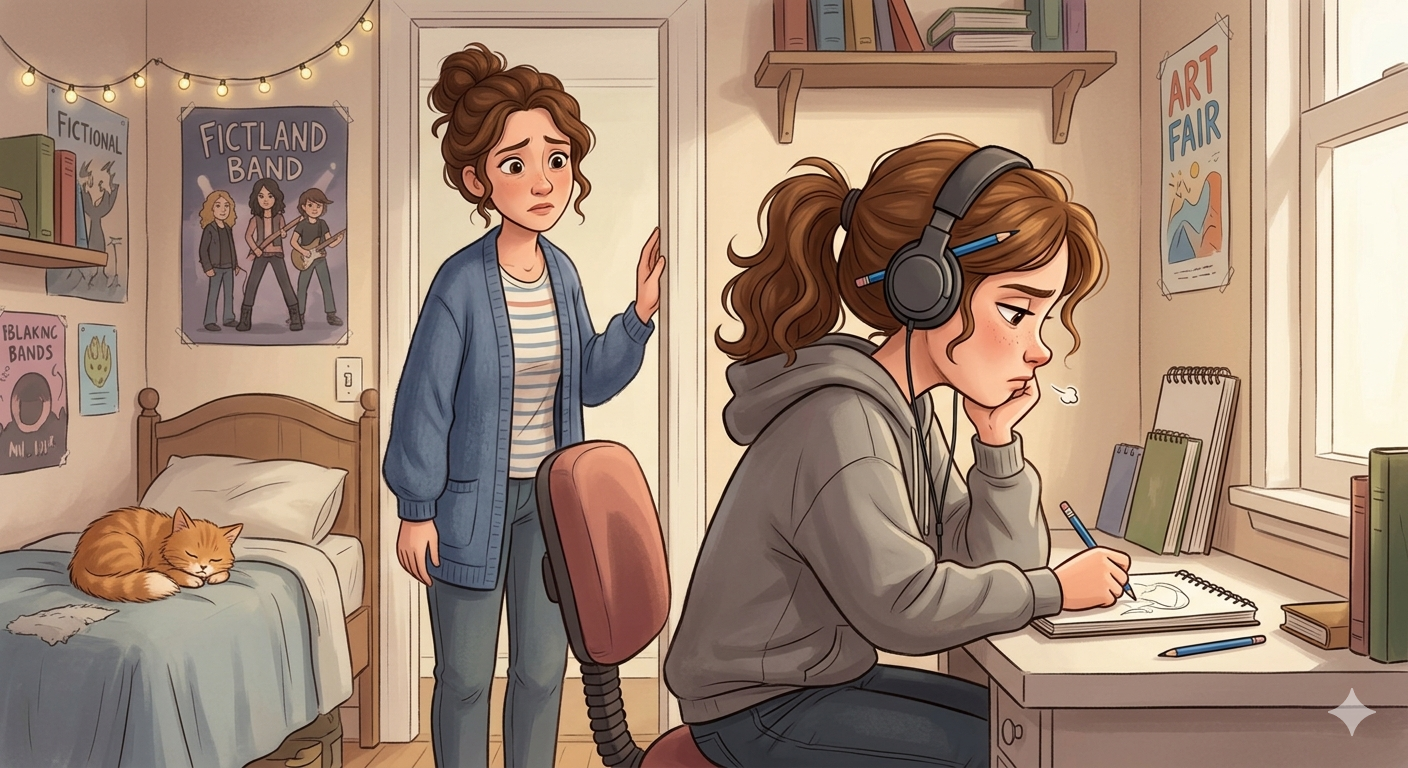
A mother knocks on her daughter's bedroom door.
A few years earlier, the door would have opened immediately. There would have been a story about recess, a question about a class project, or a detailed explanation of something that happened during the day. Conversation flowed naturally because the child had not yet started filtering her experiences through growing self-awareness.
Now the response is different.

"I'm fine."
"Nothing."
"Can I just be alone for a minute?"
For many parents, these moments can feel surprisingly painful. The daughter who once shared everything now seems distant. Questions are met with short answers. Attempts to help are sometimes met with irritation. Offers of support appear unwanted.
It is easy to interpret this change as rejection.
Many parents quietly wonder whether they have done something wrong. They worry that the connection is slipping away or that their daughter no longer needs them in the same way she once did.
What makes these years particularly confusing is that the behavior often appears to contradict itself. A girl may push a parent away in the afternoon and seek comfort from that same parent later that evening. She may insist on handling something independently, only to become upset when she feels unsupported. She may crave privacy while simultaneously feeling lonely.
The contradiction is real.
But contradiction is often part of adolescence.
One of the most important things parents can understand during the tween years is that distance does not always mean disconnection. Sometimes a girl pushes away the very person she still depends on because she is trying to navigate a developmental stage where independence and attachment are both growing at the same time.

The Desire for Independence Often Arrives Before the Skills to Manage It
One reason these years feel so confusing is that emotional development rarely happens in a neat, predictable sequence.
A girl begins wanting more independence long before she feels completely comfortable managing it. She wants more privacy. She wants more control over decisions. She wants greater ownership of her experiences. These desires are healthy and expected. They are part of growing up.
The challenge is that emotional needs do not disappear simply because independence increases.
A girl may want to solve her own problems and still need reassurance.
She may want space and still need connection.
She may want fewer questions and still want someone paying attention.
Adults often assume independence means needing less support. During the tween years, that assumption can create misunderstandings. What many girls are actually asking for is a different kind of support. They want parents who remain present without taking over. They want guidance without feeling controlled. They want connection without feeling scrutinized.
That balance can be difficult for both sides.
Parents are trying to adjust to a changing relationship while daughters are trying to understand changes happening within themselves.


Why Emotional Withdrawal Is Often Misinterpreted?
When adults think about emotional withdrawal, they often picture sadness, isolation, or serious distress. Sometimes those things are present. More often, however, withdrawal appears in smaller and less dramatic ways.
A girl spends more time alone in her room.
She shares fewer details about her day.
She becomes selective about what information she offers.
She responds to questions with shorter answers.
None of these behaviors automatically indicate a problem.
In many cases, they reflect a growing desire to process experiences independently.
This is an important distinction because parents sometimes become alarmed by developmental changes that are actually quite normal. A girl who used to narrate every detail of her school day may no longer feel the same need to do so. She may be spending more time reflecting internally. She may be sorting through experiences before deciding whether she wants to discuss them.
The challenge is that parents often experience this change as a loss of information.
The daughter experiences it as a gain in privacy.
Neither perspective is wrong.
They are simply viewing the same transition from different positions.
Problems tend to arise when adults interpret every request for space as rejection. Once that interpretation takes hold, conversations can become emotionally charged. Parents ask more questions because they feel disconnected. Daughters answer fewer questions because they feel pressured. Both sides end up feeling misunderstood.

The Growing Awareness of Being Observed
A younger child often speaks freely because she is not thinking much about how she sounds. A tween becomes more aware of how she is perceived. She begins evaluating her own thoughts, emotions, and reactions in ways she never did before.
This shift affects conversations at home.
Questions that once felt simple may suddenly feel complicated.
A parent asks, "How was your day?"
The daughter hears, "Explain everything you're feeling."
A parent notices a change in mood.
A parent offers advice.
The daughter feels analyzed.
These reactions are not necessarily logical from an adult perspective, but they make sense when viewed through the lens of growing self-consciousness
Many tweens are experiencing emotions they do not fully understand yet. Being asked to explain them before they have processed them can feel overwhelming.
This is one reason some girls withdraw when they need support the most. The support itself is not unwanted. The pressure to explain everything immediately may feel uncomfortable.

Why Girls Often Turn Irritation Into a Boundary
Parents frequently notice that requests for space are not always delivered politely.
Instead of saying, "I need some time to myself," a girl may sound annoyed, defensive, or impatient.
This can be frustrating because the tone often overshadows the message.
What adults sometimes miss is that irritation frequently functions as a boundary during adolescence.
A girl may not yet have the language to communicate her needs clearly. She knows she wants space. She knows she wants privacy. She knows she wants a little room to think. The easiest available tool becomes irritation.
This does not mean rude behavior should be ignored. Boundaries around respect still matter.
But understanding the purpose behind the behavior changes how parents interpret it.
Instead of viewing every irritated response as evidence of disrespect, it can be helpful to ask whether the irritation is attempting to communicate something else.
Sometimes the message underneath the attitude is surprisingly simple.
"I need a little time."
"I don't know how to explain this."
"I'm still figuring it out."
"I'm not ready to talk yet."

Staying Connected Without Chasing Connection
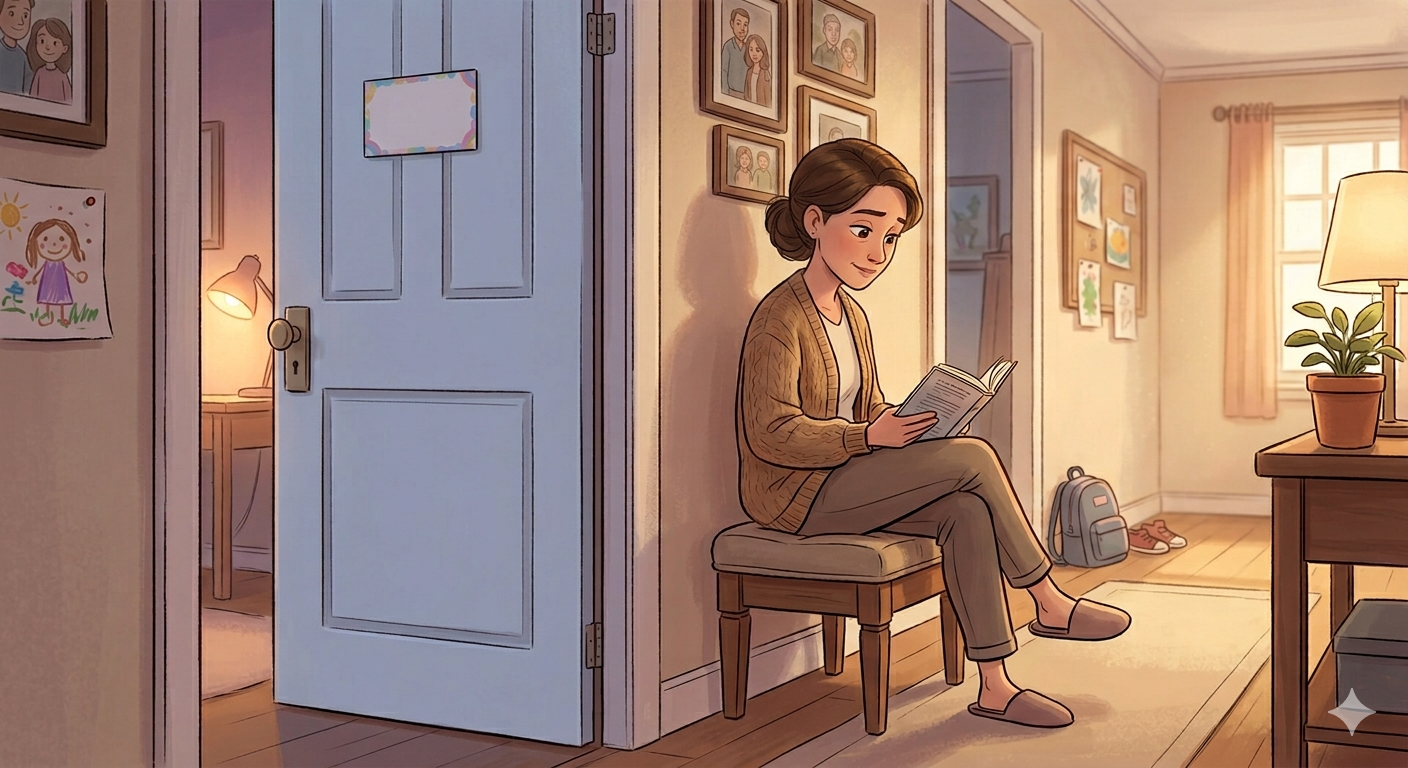
One of the most difficult parenting instincts to manage during the tween years is the urge to chase connection when it feels like connection is slipping away.
A daughter becomes quieter.
A parent asks more questions.
The daughter withdraws further.
The parent pushes harder.
Neither person is trying to create conflict.
Both are responding to discomfort.
Parents often believe that more conversation will automatically restore closeness. Sometimes it does. Other times, persistent attempts at conversation create pressure that makes closeness harder.
Many girls open up most naturally when they do not feel required to.
Conversations often emerge during car rides, while walking the dog, while cooking dinner, or during ordinary moments that do not feel emotionally loaded.
This is one reason shared experiences can become so valuable during adolescence. They create opportunities for connection without placing the entire focus on communication itself.
The goal is not extracting information.
The goal is maintaining a relationship where information feels safe to share when a girl is ready.

What Connection Looks Like During the Tween Years
Many parents compare their current relationship with their daughter to the relationship they had a few years earlier.
This comparison is understandable.
The problem is that it often uses childhood as the benchmark.
Connection changes during adolescence.
It becomes less constant.
Less predictable.
Less visible.
But less visible does not necessarily mean less meaningful.
A daughter who spends more time alone may still care deeply about her relationship with her parents.
A daughter who shares fewer details may still be paying close attention to how supported she feels.
A daughter who rolls her eyes today may still come looking for comfort tomorrow.
Parents sometimes underestimate how much influence they continue to have because the signs of connection look different than they once did.
The conversations may be shorter.
The invitations may be less obvious.
The affection may appear less frequent.
The need for connection, however, often remains remarkably strong.


The Goal Is Not Constant Closeness
Many parents enter adolescence hoping to preserve the same level of closeness they enjoyed during childhood.
That goal is understandable, but it can create unnecessary frustration.
The tween years are not designed to look like early childhood.
Girls are developing separate identities. They are experimenting with independence. They are learning how to manage emotions, relationships, and decisions in increasingly complex environments.
Some distance is part of that process.
The goal is not preventing distance entirely.
The goal is remaining a steady presence while that distance develops.
A girl does not need a parent who forces closeness.
She needs a parent who remains available.
She needs a parent who remains available.
Someone who respects her growing independence without withdrawing support.
Someone who can tolerate periods of silence without assuming the relationship is broken.
Someone who understands that pushing away and needing connection can exist at the same time.
Because for many girls, that is exactly what adolescence feels like.
They are moving away from childhood while still needing the people who helped them through it.
The behavior may not always communicate that clearly.
The need is often there anyway.
