
10 Things Not to Stop Doing With Your Tween Girl
As girls enter the tween years, many parents assume it's time to let go of the little routines that once brought them close. Bedtime chats fade, hugs become less frequent, and everyday rituals quietly disappear in the name of growing independence. But getting older doesn't mean your daughter needs less connection—it simply means she needs it in new ways.
The habits that seem small today often become the foundation of trust, confidence, and emotional security tomorrow. By continuing a few intentional rituals, even as your daughter seeks more independence, you remind her that your support is steady, your presence is reliable, and your relationship is built to grow alongside her.
Ten Things Not to Stop Doing Just Because She's Getting Older
She stopped wanting a bedtime story around nine. I took that as the signal to stop most of our small rituals, the ones that felt babyish now that she had opinions about her own hairstyle and a group chat. That was the wrong read. She didn't want less closeness. She wanted it delivered differently.
Here's a list of things worth keeping, even as she gets older, pulls back, and starts testing independence.

1. Tucking Her In, Even If She Says She Doesn't Need It
The story might be gone. The two minutes sitting on the edge of her bed while she talks about nothing in particular usually isn't. That's often when the real thing comes out, dropped sideways because it's easier to say in the dark than at dinner.
2. Saying No Out Loud
Somewhere in the last few years, a lot of parents got told that saying no needs a paragraph of justification or a question dressed up to look like a choice. It doesn't. A calm, plain no, held consistently, tells her the world has edges. That's regulating, not harsh.
3. Physical Affection She Didn't Ask For
A hand on her back walking into a room. A hug before school even when she's in a mood. She may not ask for it anymore. That doesn't mean the request disappeared, it means it moved underground. Keep offering it. Let her opt out when she wants to.
4. Correcting Her When She's Wrong
As she gets more confident and more vocal, it gets tempting to let things slide to avoid a fight. Don't. Being told the truth, even when it's uncomfortable, is how she learns her opinions can survive being challenged. Softening every correction into agreement doesn't protect her confidence, it starves it.
5. Asking About Her Friends by Name
Not "how was your day," which gets a shrug every time. Ask about the specific friend, the specific situation you already know is unfolding. Specific questions get specific answers. Vague questions get silence.
6. Letting Her See You Struggle a Little
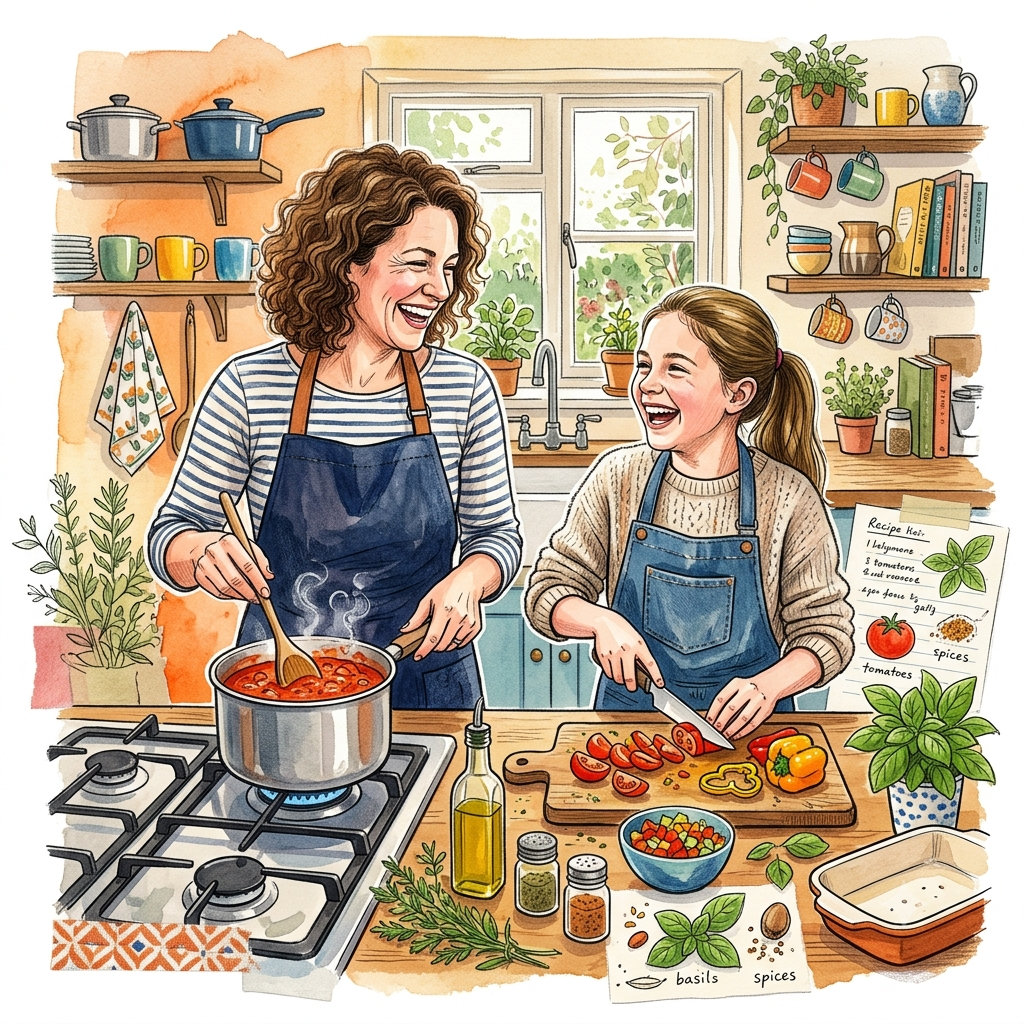
Not every hard moment needs to be hidden until it's resolved and packaged into a lesson. Let her see you frustrated with a work problem, honestly annoyed about something small, then let her see you handle it. She's watching for the skill, not the performance of calm.
7. Reading Together, Even If It's Not Bedtime Stories Anymore
The format changes. It might be the same book you're both reading separately, or her reading over your shoulder while you're on your phone. Shared attention on the same thing still counts, even without a picture book involved.
8. Checking In Before You Assume She's Fine
Quiet doesn't always mean fine. At this age, she's more likely to go still than to explode when something's wrong. A direct, low-pressure checkin, "You've been quiet, what's going on," costs you nothing and sometimes catches something real before it grows.
9. Telling Her What You Notice About Her, Not Just What She Did
"You handled that fair" lands differently than "good job." One names a trait she's building. The other just closes the loop on a task. At this age, she's actively forming an idea of who she is. Specific observations about her character give her material to build that idea from.
10. Holding the Same Boundary You Held Last Year
Consistency is the actual currency here. If bedtime was 8:30 and now it's whatever she negotiates that night, the lesson she's absorbing isn't about bedtime. It's that rules bend under enough pressure. Hold the line the same way you did a year ago, adjusted for her age, not for her mood that day.

Why This List Matters Right Now
None of these are dramatic. That's the point. The tween years don't usually announce themselves with one big moment where everything changes. They erode slowly, one skipped ritual at a time, until you look up at thirteen and wonder when the closeness went quiet.
Keep the small things going. Not because they're sentimental, but because they're the structure she's building her sense of self on, whether either of you notices it happening.
I want to help girls build confidence from knowing who they are, not from constantly evaluating how they look. The habits above are how that gets built, one ordinary Tuesday at a time.