
The "Group Chat" Anxiety: When to Let Her Navigate & When to Step In
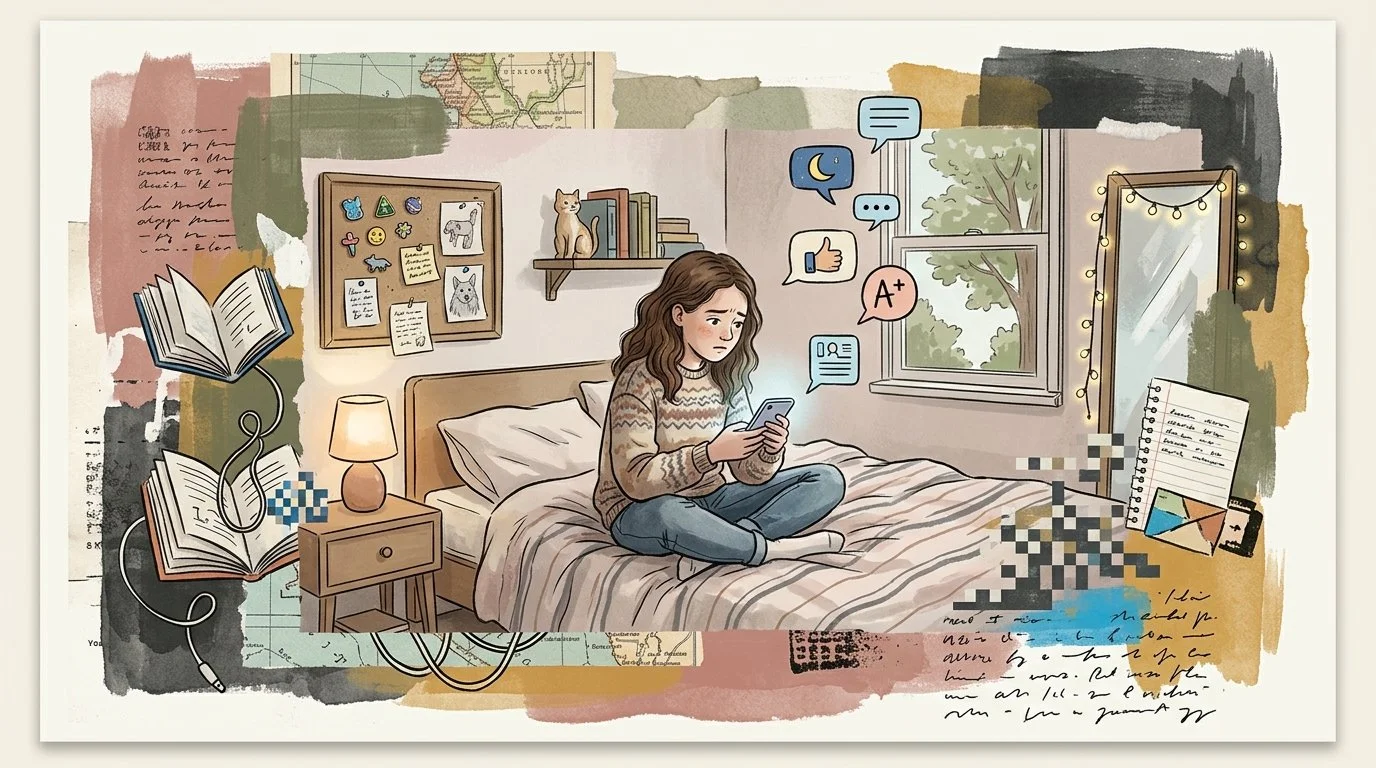
For previous generations, the social world of middle school was confined to the hallways, the cafeteria, and the occasional landline phone call that felt like a high-stakes performance. When the school bell rang, the drama often stayed behind, or at the very least, it remained contained. Today, the social world of a tween girl is a 24/7, high-speed digital stream that never stops.
The modern "group chat" has become the primary hub for social connection, validation, and status. It is a digital living room where she processes her day, tests her humor, and experiences her first social stings. As parents, hearing that ding on her phone at 9:30 PM can trigger an immediate, visceral reaction. You might feel the urge to snatch the device and demand to see what is causing the stress. But before you intervene, we have to understand the nuances of this new social reality.
The Developmental Importance of the Digital "Practice Phase"
Developmentally, tweens are in a crucial "practice phase." They are learning how to exist outside the family unit and how to navigate peer relationships. If we rush to solve every conflict for them, we strip them of the opportunity to develop their own "friendship compass."
Think of the group chat as a high-velocity training ground. If she’s experiencing minor friction; a misunderstood joke, someone being "short" with her, or a debate over what movie the group should watch, these are not crises; they are social data points.

When you see her frustrated, resist the urge to immediately suggest a solution. Instead, ask open-ended questions that force her to evaluate the dynamic herself:
"How did that comment make you feel in the moment?"
"What do you think was behind that response?"
"What do you think is the best way to respond so you stay true to yourself?"
This turns a stressful moment into a coaching session. By allowing her to navigate these smaller ripples, you are helping her build the resilience she will need when the waves get much larger.
When the "Practice Phase" Becomes a Safety Issue
However, there is a clear, non-negotiable line between "social learning" and "psychological harm." While we want to encourage independence, we are also responsible for our child's mental safety. You must be a present, active observer if you notice the following red flags:
Systemic Exclusion: This is more than just not being invited to a party; it is a calculated effort to make her feel invisible. If she is being intentionally left out of multiple chats or mocked in a secondary, hidden "hate group" chat, this is bullying.
Targeted Harassment: If the language in the chat shifts from petty to aggressive, threatening, or dehumanizing, the "practice phase" is over.
Drastic Behavioral Shifts: Keep an eye on her "baseline." If she is coming home from school every day in tears, refusing to eat, avoiding her favorite hobbies, or becoming obsessively anxious about her phone, you must step in. Her mental health and sense of self-worth are the priorities here.
The "Observer" Approach: How to Intervene Without Alienating Her
The moment you demand access to her phone, the doors will slam shut. Teen and tween girls are fiercely protective of their privacy because, in their minds, their phone is their identity. If you try to police the chat, she will simply move the conversation to a platform you can’t see.
Instead, you need to be a partner, not a detective.

Try these strategies to stay connected to her digital world:
The "Observer" Approach: Ask her to explain the group dynamic to you. "I notice you seem really stressed about the chat lately. Walk me through what’s going on in there." If she feels safe talking to you, she is far more likely to show you the messages voluntarily.
Define "Healthy Tech" Limits: It’s not about policing her friends; it’s about protecting her nervous system. Establish "Tech-Free Zones" in the house (like the dinner table or after 8:30 PM). By mandating these breaks, you aren't being "mean"; you are giving her a break from the algorithm.
Teach the "Mute" Button: Remind her that she is the administrator of her own attention. Teach her that she doesn't have to respond immediately, and she doesn't have to watch every conversation unfold in real-time. She has the power to mute a chat and check it when she’s ready or never at all.
Final Thoughts: You Are the Anchor
The goal of parenting a tween girl in the digital age isn't to be a firewall that blocks every negative interaction. It is to be the anchor.
The digital world is designed to be noisy, urgent, and overwhelming. Your job is to be the steady, non-judgmental ear that stays calm when she brings you the drama of her group chat. By keeping your cool and guiding her toward her own solutions, you become the first person she turns to when the digital world gets "too loud." And that connection? That is your greatest parenting asset.