
When Growing Taller Changes Everything
A girl who was comfortable with her appearance suddenly seems uncomfortable. A girl who was confident in social situations suddenly seems hesitant. What looks like a personality change is often actually a response to physical change that feels isolating.
Growth is supposed to be a positive thing. We celebrate getting bigger and taller. But for many girls, a significant growth spurt can feel destabilizing in ways that adults do not always anticipate.
A girl has been average height her entire life. Unremarkable. Just where most kids her age are supposed to be. Then, somewhere in the sixth or seventh grade, she shoots up. Suddenly she is taller than most of the boys. Taller than kids a year or two older than her.
The physical change is obvious. But what surprises parents is how much this single physical change seems to influence everything else. She becomes self-conscious about the way she looks. She starts wearing shoes with less lift. She begins slouching. She becomes more withdrawn in social situations.
Why Height Feels Different Than Other Body Changes
Additionally, height changes the way people perceive you and interact with you. Adults suddenly notice you more. Peers react differently. You no longer blend in the way you used to.
For girls who are used to being invisible or unremarkable, this attention can be uncomfortable. For girls who are used to being confident, sudden visibility can feel exposing.
Body changes during puberty are multiple and simultaneous. Breast development.
Hip widening. Hair growth. Skin changes. For many girls, these changes feel private. They can be hidden. They can be managed.
Height is different. Height is visible. It is obvious. It cannot be hidden or managed or minimized. A girl cannot wear an outfit that makes her less tall.

The Gender Component of Height
This gendered response to height often influences how girls experience their own growth. A girl who grows very tall may internalize the message that her size is somehow wrong. That she should minimize it. That there is something unfeminine about taking up so much physical space.
This is one reason many tall girls become self-conscious about their height. It is not simply about being different from peers. It is about absorbing cultural messages that suggest her size is problematic
For boys, height during the tween years is often celebrated. Tall is seen as strong and dominant. Growing taller is moving toward an idealized version of manhood.
For girls, height is more complicated. There is cultural messaging that suggests girls should be smaller and more delicate. Being tall can feel masculine. It can feel like you are taking up too much space. It can feel like you are not conforming to expectations about what girls should look like.
When Height Outpaces Confidence
Some girls respond to this by trying to act older. They adopt a more mature persona to match their appearance. Others respond by withdrawing because the mismatch feels confusing and exposing.
Neither response is comfortable. The girl is essentially being asked to grow into a body faster than her development actually allows.
One of the challenges of early growth is that physical development often outpaces emotional and social development. A girl might grow to her adult height while still being emotionally a tween.
This creates a mismatch. Her body looks older than she feels. Adults treat her as if she is more mature than she actually is. Peers perceive her as older. But internally, she is still processing the same insecurities and questions as everyone else her age.
The Impact on Friendships
For many girls, early growth creates a shift in friendships. She suddenly looks different from her peers. She stands out literally. This can create social distance.
Some girls in the same peer group may not have grown yet. This creates visual differentiation. The tall girl stands out. This can be uncomfortable for both the tall girl and her peers.
Additionally, early growth sometimes changes how boys perceive a girl. She looks older. They may suddenly notice her in ways they did not before. This attention can feel exciting and uncomfortable simultaneously.
A girl who had comfortable peer relationships may suddenly feel awkward in those relationships because the dynamic has shifted. She looks different. People treat her differently. The social ease that existed before feels harder to maintain.
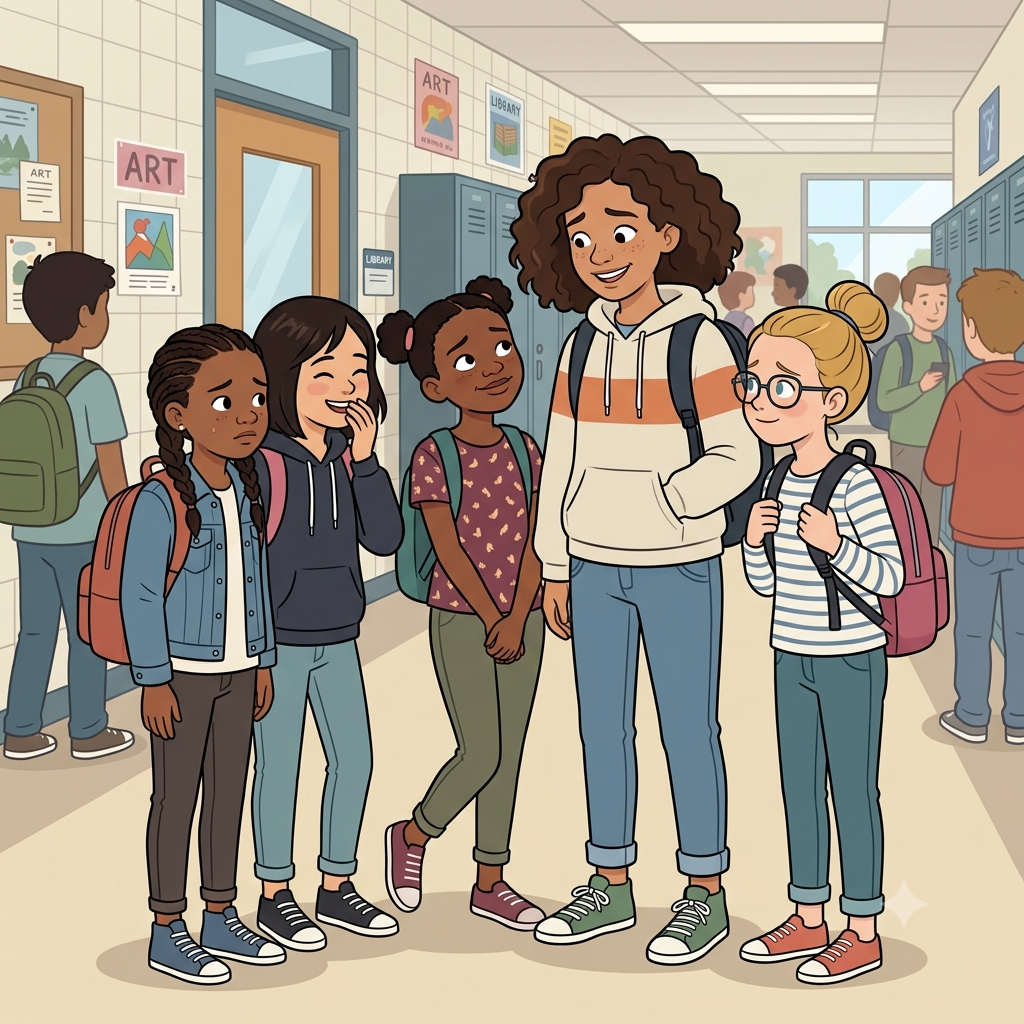
How Posture Communicates Discomfort
This is particularly common in girls who were not prepared for early height and who absorb cultural messages that their size is problematic.
Addressing this is not about correcting posture. It is about helping a girl feel comfortable in her own body. A girl who feels good about being tall naturally stands taller. A girl who feels self-conscious about her height naturally tries to minimize.
Parents often notice that tall girls start slouching. Their posture gets worse. They seem to be trying to take up less space.
This is actually not simply a postural problem. It is an emotional communication. By slouching, a girl is trying to minimize her visibility.
She is trying to be smaller. She is trying to fit in rather than stand out.
Supporting Girls Through Early Growth
Creating visibility for tall role models. Helping her see successful, confident women who are tall.
Protecting against teasing. Making it clear that comments about her height are not acceptable.
Helping her reconnect with her peers. Talking about how her friends might perceive the change. Working through any friendship shifts that occur.
Celebrating function over appearance. Focusing on what her body can do rather than how it looks.
Parents can support their daughters through significant growth by:
Naming what is happening. "You have grown so much. That is a big physical change and it might feel strange for a while."
Normalizing the discomfort. "Many girls feel self-conscious when they grow quickly. That is a normal response."
Addressing gendered messaging. "Taking up physical space is not unfeminine. Tall girls are still girls."
What Height Teaches About Acceptance
Interestingly, the girls who adjust most successfully to early height are often those who learn to accept what they cannot control and focus on what they can.
She cannot control that she grew. She cannot control that she stands out. She cannot control that people notice her more.
But she can control how she carries herself. She can control how she talks about her own body. She can control whether she accepts or rejects the cultural messages that suggest her size is problematic.
Girls who learn to do this often emerge from the discomfort of early growth with a kind of acceptance and confidence that serves them well beyond the tween years.

What Parents Can Remember
Physical growth is not just physical. It influences identity, self-perception, and social relationships. A significant growth spurt can be destabilizing even though it is developmentally normal.
Parents who acknowledge the emotional impact of physical growth, protect against negative messaging about size, and help their daughters accept what they cannot control often help them move through this transition more smoothly.
Because learning to be comfortable in your own body, whatever size it is, is one of the important lessons of adolescence.
