
Curated vs. Real: Helping Her Spot the Filters in Her Feed
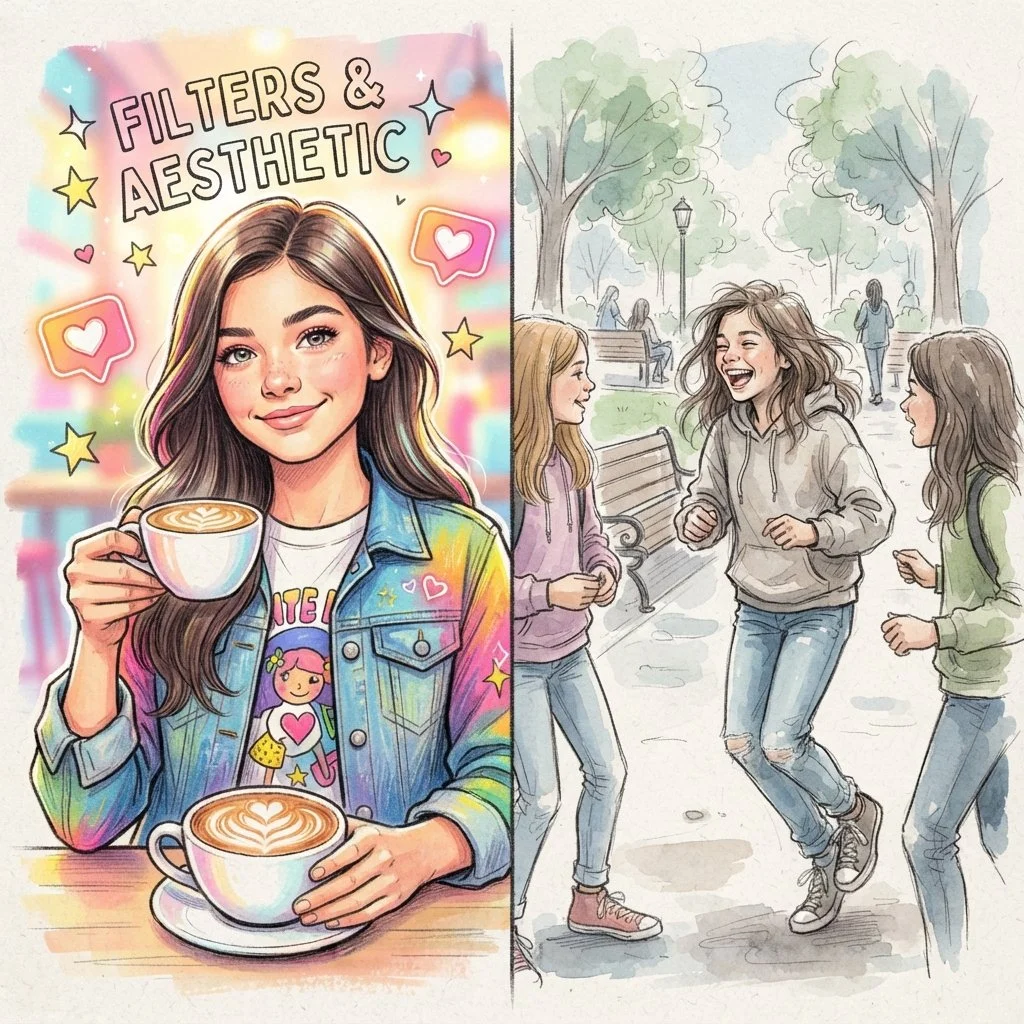
In the palm of your tween daughter’s hand lies a gateway to an infinite parade of "perfect" lives. She sees influencers with seemingly flawless skin, impossibly curated bedrooms, and social calendars that appear to be a non-stop highlight reel of joy and adventure. For a girl in the midst of the most physically and emotionally turbulent years of her life, this curated reality can be a minefield of "comparison traps."
It is easy to assume that because our daughters were born into the digital age, they are "digital natives" who intuitively understand the difference between a post and reality. The reality is quite the opposite. They are highly skilled at using the technology, but they are often the most vulnerable to the psychological illusions that technology creates.
Helping your daughter spot the "filters" in her feed isn't about forbidding social media; it’s about upgrading her digital literacy so she can protect her self-worth from becoming collateral damage.
The Science of the "Highlight Reel" Effect
The human brain is naturally wired for social comparison. We constantly check our status against those around us to understand where we fit in the hierarchy. The problem with social media is that it has supercharged this instinct. Your daughter is no longer comparing herself to the 50 girls in her grade; she is comparing herself to the most curated, edited, and professionally lit versions of millions of people worldwide.
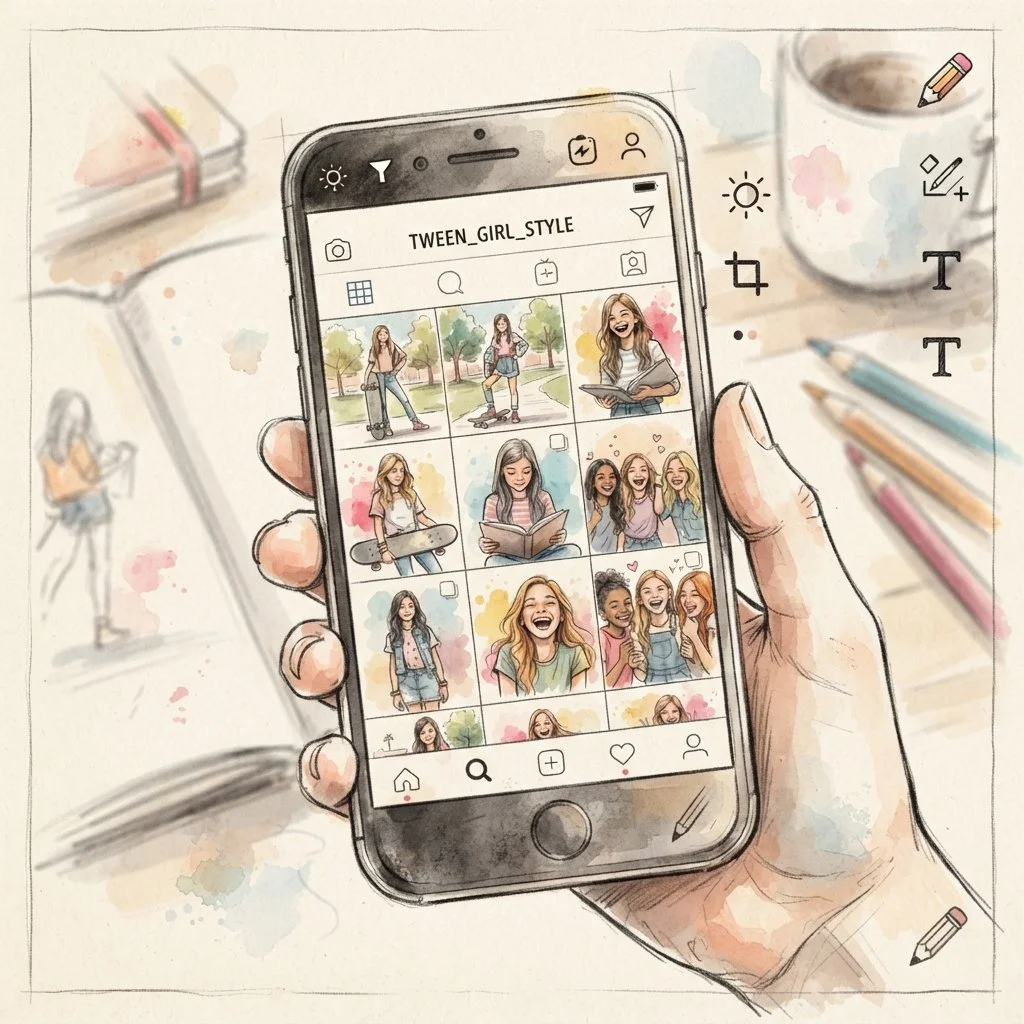
When she scrolls, her brain receives a steady stream of "evidence" that she is somehow falling behind. If she doesn't see the hours of makeup, the ring lights, the dozens of "failed" photos, and the complex editing apps used to achieve that one perfect shot, she assumes the outcome is natural. To her, the filter is the truth.
How to Build Her "Digital BS-Meter"
You don’t need to be a tech expert to teach your daughter to deconstruct what she sees. You just need to ask the right questions. Here is how you can help her develop a more critical eye:
1. The "1-in-100" Rule
Challenge her to look at her own feed. Ask her, "Out of the hundred photos you took to get that one post, how many were blurry, awkward, or just not 'the one'?" When she acknowledges the effort she puts into her own curation, it becomes much easier for her to realize that the influencers she admires are doing the exact same thing. She is seeing the "best of," not the "reality of."
2. Introduce the "Editing Process"
If she uses filters, don’t shame her for it—instead, talk about it. Ask, "What do you like about that filter? Does it change the shape of your face? Does it smooth your skin? Why do you think that's considered the 'ideal' look?" This moves the conversation from judgment to analysis. By talking about why we use filters, you empower her to understand the motives behind her own digital behavior.

3. Follow the "Real" Voices
The best antidote to a curated feed is a diverse one. Encourage her to follow creators who are known for transparency—those who post "expectations vs. reality" content, who show their acne, their bad hair days, or their boring homework sessions. By diversifying her feed, you help her normalize human imperfection, making it harder for the "perfect" influencers to make her feel inadequate.
When to Pivot to "Value-Based" Scrolling
Digital literacy is also about emotional regulation. If she is scrolling and she starts to feel "less than"—unhappy, anxious, or self-critical—that is a signal, not a failure.
Teach her to treat her feed like a diet. If a specific account consistently leaves her feeling bad, it doesn’t matter how "cool" or "popular" they are. She has the power to curate her experience. Remind her: "Your feed should be a place that makes you feel inspired, entertained, or informed. If it’s making you feel bad, it’s not serving you."
The Role of the Parent as a "Reality Check"
You don't need to be the "Anti-Social Media" parent, but you do need to be the "Reality Check" parent. When she sees something that seems impossibly perfect, invite her to pause.
"That photo looks like it took a whole team to produce, doesn't it?"
"Do you think they really look like that when they wake up in the morning?"
These aren't lectures. These are brief, calm reminders that the digital world is a constructed environment.
By helping your daughter peel back the layers of digital curation, you are doing more than just helping her manage an app. You are teaching her that her worth is not a performance. You are teaching her that real life—with all its mess, confusion, and beautiful imperfections—is far more valuable than anything she could ever find on a screen.