
Puberty Growth Spurts and Clumsiness: Why a Tween Girl May Suddenly Feel Awkward in Her Own Body
A girl who has walked through the same kitchen for years suddenly clips her hip on the counter. She knocks over a water bottle while reaching for a pencil, trips over her own feet, or feels strangely off during practice.
Adults may laugh and call it clumsiness. She may experience it differently.
When a body changes quickly, it can temporarily feel less familiar. Arms are longer, legs take up more space, shoes stop fitting, and movements that used to feel automatic may need adjustment.
Growth Changes More Than Height
Growth spurts are usually discussed in terms of inches. She gets taller, her pants become too short, and shoes bought recently stop fitting.
Rapid growth also changes proportions. Different parts of the body may grow at different rates, which means the brain is constantly updating its sense of where the body is in space.
That adjustment can affect coordination temporarily. A girl who feels awkward is not necessarily becoming less athletic or less capable.
Her body may simply be changing faster than her movement patterns can immediately adapt.
Why Athletes May Notice It More
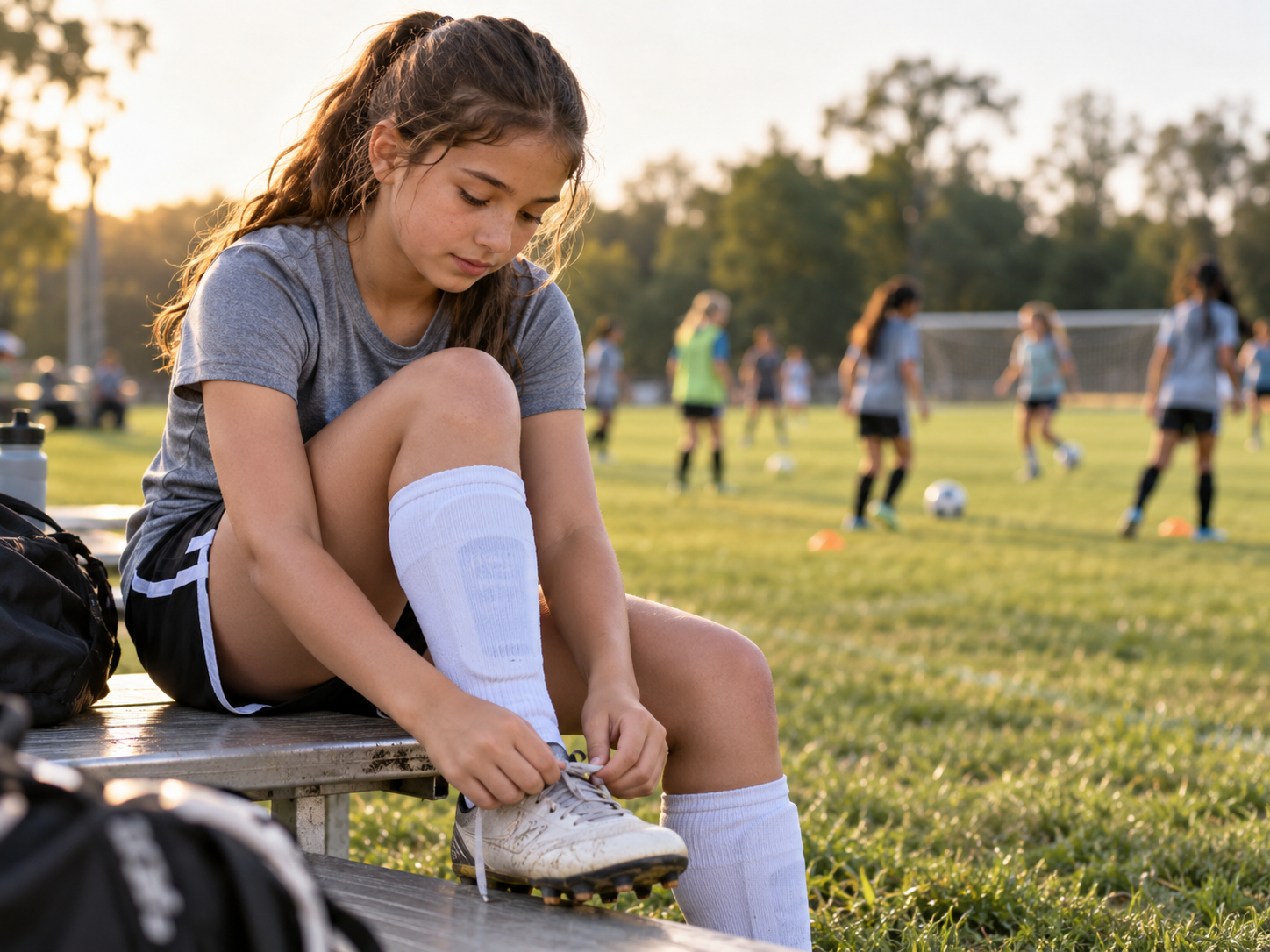
Girls who play sports, dance, skate, or do other movement-based activities may notice these shifts quickly because they rely on precise timing and body awareness.
She knew where her feet were during a turn. Then her feet grew. She knew how much force to use for a pass, and then her limbs got longer.
The skill did not disappear. The body performing the skill changed.
Coaches and parents can help by treating this as adjustment rather than decline. “She is recalibrating in a growing body” leaves room for change. “She is getting sloppy” attaches a judgment to it.
Clothing Can Add to the Awkwardness
Growth spurts also create physical distraction. Sleeves become short, waistbands sit differently, bras shift, shoes pinch, and athletic clothing that fit comfortably earlier in the year suddenly feels wrong.
A girl who keeps adjusting her clothes may look self-conscious because she is self-conscious. Part of that self-consciousness may be practical.
Before interpreting new clothing concerns as vanity, check the basics. Can she move comfortably? Are her shoes the correct size? Does her sports clothing stay where it should?
Sometimes confidence improves after replacing clothes that no longer fit the body she currently has.
Avoid Turning Clumsiness Into a Personality
Families create identities quickly. One child becomes the organized one, another the funny one, and another the clumsy one.
Once a label sticks, ordinary mistakes start being collected as evidence. “She spilled again. That is so her.”
A tween hears those patterns. If she is already uncomfortable in a changing body, becoming the family’s “clumsy one” gives temporary awkwardness more permanence than it deserves.
Describe the event instead. “The cup tipped” is different from “You always knock things over.” One lets the moment end.

Embarrassment Can Make Coordination Worse
Imagine stumbling in front of classmates, then spending the next five minutes thinking about who saw it. That mental split matters.
Movement becomes harder when part of her attention is devoted to monitoring how she looks while moving. Walking into a room feels more awkward when she is thinking about what to do with her arms.
Running can feel awkward when she is wondering what she looks like running. Giving a presentation becomes harder when she is also trying to decide whether her hands look strange.
This is one reason teasing about physical awkwardness can have a long afterlife. The stumble lasts seconds. The self-monitoring can continue all afternoon.
Let Her Rebuild Familiarity Through Use
The response to feeling awkward in a growing body is not withdrawing from movement. It is continuing to move.
Sports, walking, biking, swimming, dance, stretching, and ordinary physical activity give the brain more experience coordinating the body it currently has.
She does not need to become an athlete. She needs opportunities to experience her body as functional rather than only visible.
That distinction becomes increasingly important during adolescence. The more girls experience their bodies through strength, movement, balance, and learning, the less their entire relationship with the body has to be based on appearance.
Know When Something Needs Medical Evaluation
Temporary awkwardness can happen during rapid growth, but significant changes in balance, persistent weakness, frequent unexplained falls, severe pain, dizziness, or other concerning symptoms should not automatically be blamed on puberty.
Talk with your child’s pediatrician or another qualified medical professional if movement changes seem unusual, severe, or persistent.
This article is educational and does not replace individualized medical advice.
The Body Usually Feels Less Strange With Time
The hardest part of a growth spurt may be the temporary loss of familiarity. A girl reaches for the counter and misjudges where it is. Her favorite jeans fit differently. A sports movement needs recalibration.
None of these moments is dramatic by itself. Together, they can make her feel as though she is operating equipment that changed overnight.
Clear explanations help. Her body is not betraying her. It is changing, and coordination can require time to catch up.
She is still learning where all of her is.