
Oily Hair During Puberty: Why Her Old Shampoo Routine May Suddenly Stop Working
She washed her hair last night, but by lunchtime the roots already look different. A girl who has followed the same hair routine for years may suddenly feel as though she is doing something wrong.
She shampoos more aggressively, washes again the next morning, or starts trying products because the problem seems like poor hygiene. In reality, puberty can change how much oil the scalp produces. The routine may not have failed at all.
Her body changed.
Why Hair Can Become Oilier During Puberty
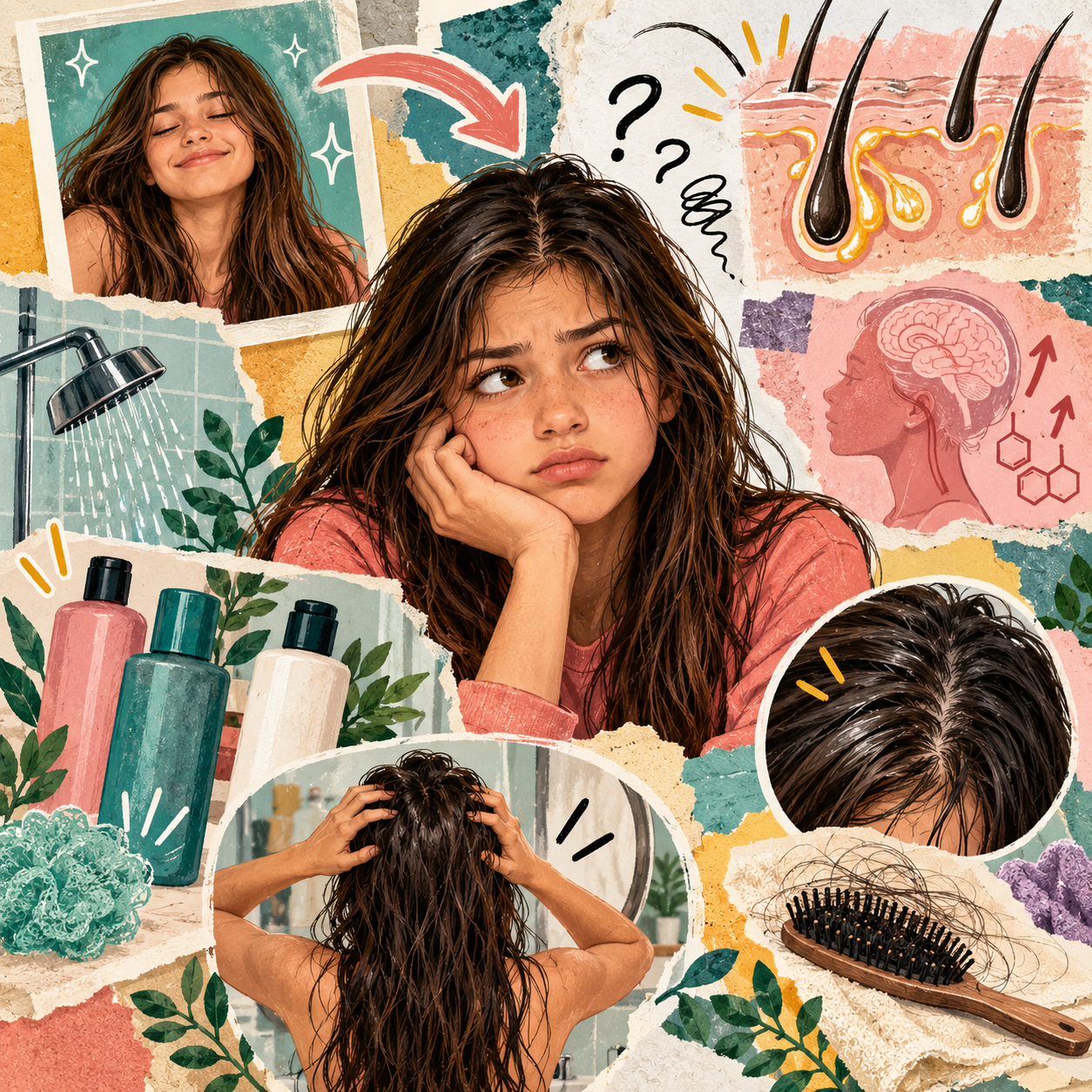
The scalp contains sebaceous glands that produce sebum, an oily substance that helps protect the skin and hair. During puberty, hormonal changes can make these glands more active.
For some girls, that means hair begins looking or feeling oily sooner than it did in childhood. A washing schedule that worked for years may suddenly stop matching what her scalp needs.
That does not mean she was unhygienic before or is careless now. It means one more routine may need to adjust as her body changes.
Avoid Turning “Greasy” Into Commentary About Her Appearance
Adults often point out oily hair because they think they are helping. “Your hair is greasy again” may sound like a practical reminder.
A tween can hear it as evidence that everyone is monitoring her appearance.
There is a better way to explain the change. “Your scalp may be producing more oil now, so we may need to change how often you wash your hair.” That sentence gives the problem a reason and keeps her body out of the judgment.
The difference is small in wording and large in meaning.
How Often Should a Tween Wash Her Hair?
There is no single schedule that works for every girl. Hair texture, scalp oil production, activity level, sports, products, climate, and individual preference all matter.
A girl with straighter hair and an oily scalp may prefer more frequent washing. A girl with curly, coily, or textured hair may need a different routine that cleans the scalp without drying the lengths.
Observation is more useful than a universal rule. Does the scalp feel oily or itchy? Is there product buildup? Is frequent washing making the hair dry or irritated?
The routine should respond to what her hair is actually doing.
More Shampoo Is Not Always Better
Once a girl decides oil is the enemy, she may start attacking it. She uses too much shampoo, scrubs harder, washes multiple times, or adds products recommended online.
That can create irritation and confusion instead of solving the original problem.
Teach the basic job first. Shampoo is mainly used to cleanse the scalp and roots. She can massage it gently into the scalp, rinse thoroughly, and use conditioner where her hair needs it.
She does not need to punish her scalp for producing oil.
Pay Attention to What Happens After Sports
Gym class, dance, soccer, helmets, hats, and warm weather can change how hair feels. A routine that works on a quiet weekend may not work after practice.
That does not mean she needs a complicated schedule. It means routines can respond to activity.
She might wash after especially sweaty practices, adjust hairstyles, or keep a brush and hair tie in her bag. The useful lesson is flexibility.
Puberty hygiene works better when girls learn to respond to their bodies rather than follow rules mechanically.
Dry Shampoo Is an Option, Not a Replacement for Washing
Some families use dry shampoo between washes. It can absorb some oil and make hair feel fresher temporarily.
It does not clean the scalp in the same way regular washing does, and heavy use can create buildup. If your daughter uses it, show her how to follow the product directions and how it fits into a larger routine.
Girls are exposed to a lot of beauty content online. A simple hygiene change can quickly become a shopping category if nobody explains the difference between what is necessary and what is optional.
When Scalp Changes Need Medical Attention
An oily scalp by itself is often manageable with routine changes. Persistent itching, painful sores, significant flaking, redness, hair loss, or other concerning scalp changes should be discussed with a pediatrician, dermatologist, or other qualified medical professional.
The same principle applies throughout puberty. Ordinary changes deserve clear explanations, while persistent or unusual symptoms deserve medical evaluation.
This article is educational and does not replace personal medical advice.
Let Her Own More of the Routine
Puberty hygiene eventually needs to become her responsibility. That does not mean handing her shampoo and disappearing.
It means gradually shifting from reminders to awareness. Instead of repeatedly saying, “Wash your hair,” help her recognize what tells her a wash is needed.
“What does your scalp feel like today?” or “Did your hair feel different after practice?” requires her to pay attention. The goal is not obedience to a schedule. It is body management.
That distinction builds independence.
Why This Small Change Can Affect Confidence
Hair is visible all day. A girl who feels uncertain about oily roots may touch her hair constantly, avoid wearing it down, compare herself with classmates, or assume everyone notices exactly what she notices.
Telling her “nobody cares” does not solve the problem if she cares.
Help her adjust what can be adjusted. Find a routine that fits her scalp, activity level, and hair type. If there is irritation or another concern, get medical guidance.
Then stop talking about her hair.
The strongest hygiene support often becomes invisible once the routine works. She knows what to do, she does it, and her hair stops taking up so much mental space.