
Why Some Girls Become More Private About Their Bodies
What is changing is her relationship with her own body. Her body is changing in ways that feel personal. She is developing awareness of her body in ways she never had before. And with that awareness comes a desire for privacy.
This is developmentally normal. But when combined with cultural messages that sexualize girls' bodies, this natural desire for privacy can become tangled with shame or self-consciousness.
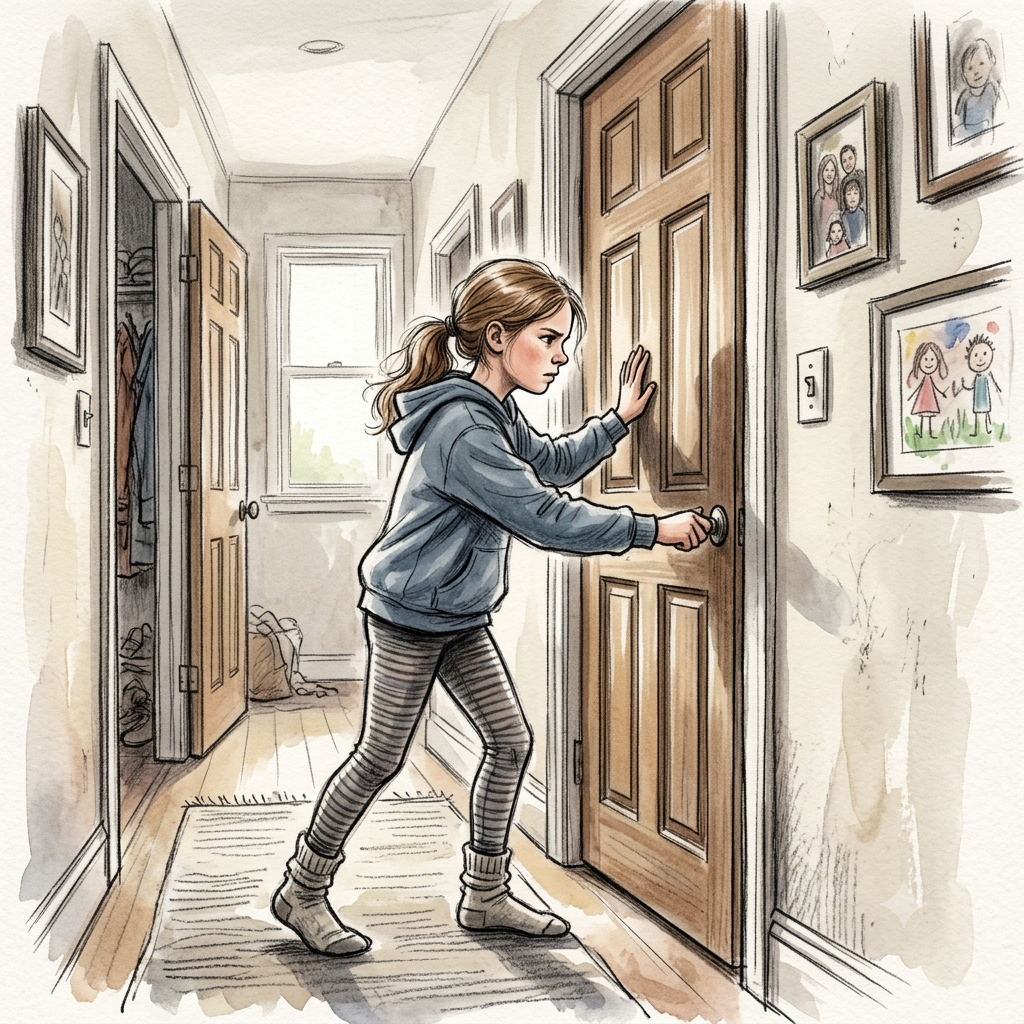
A girl who used to change clothes without thought now suddenly closes the bathroom door. She has never been concerned about privacy but now seems bothered if anyone enters her room without knocking. She was comfortable being seen in a bathing suit and now seems self-conscious about it.
Parents sometimes interpret this shift as a sign that something is wrong. Is she worried about her appearance? Has something happened that made her feel unsafe? Did someone make a comment?
Often, the shift is simpler than that.
How Body Awareness Becomes Body Privacy
The challenge is that cultural messages sometimes suggest that a girl being private about her body or modest about showing it is prudish or strange. Girls get confusing messages about their bodies. They should feel comfortable in their bodies and celebrate them. But they should also not be too visible or too confident about their bodies because that is provocative.
No wonder many girls become confused about what the appropriate relationship with their body should be.
During the tween years, girls become aware of their bodies in new ways. They notice changes. They notice that their body functions in new ways. They notice how their body looks in clothes and in photographs. They notice how other people respond to their body.
With this awareness comes a desire for privacy. Her body feels like something personal now. Something that belongs to her rather than something that is simply there for people to see.
This is actually healthy development. A girl developing boundaries around her own body is developing important self-awareness and autonomy.
When Privacy is Healthy vs. When It Suggests Shame
Unhealthy body privacy often looks like:
Refusing all physical activity because of body consciousness
Avoiding medical care because of embarrassment about the body
Avoiding situations where the body might be visible
Expressing shame or disgust about normal bodily functions
Refusing to shower or maintain hygiene
The distinction matters because while some privacy is healthy, when a girl becomes so private that it interferes with functioning, something else is happening.
Not all body privacy is the same. Some privacy is healthy and reflects appropriate boundaries.
Some privacy reflects shame or discomfort with the body that has become excessive.
Healthy body privacy looks like:
Changing clothes in private
Requesting privacy during personal care
Choosing what to wear based on personal comfort
Setting boundaries about who can see or touch the body
The Role of Comparison in Body Privacy
One thing that often drives the shift toward increased body privacy is comparison. A girl becomes more aware of how her body compares to other girls' bodies. She starts noticing differences. She evaluates her body against others.
If she concludes that her body compares unfavorably, she often becomes more private. She does not want people to see what she sees. She does not want to be judged the way she is judging herself.
This is one reason that increased body privacy is sometimes connected to body image concerns. The privacy is not simply about wanting boundaries. It is about not wanting to be seen.
How Parents Can Support Healthy Body Boundaries
Modeling comfort with your own body. Showing through your behavior that you are comfortable with your body, even if it is not perfect.
Distinguishing between modesty and shame. "You can choose to be modest about your body while still feeling good about it. Privacy and self-acceptance can exist together."
Not forcing physical affection. Allowing her to decide if and how she wants to be touched, even by family members.
Parents can support their daughters in developing healthy body privacy and healthy body relationships by:
Respecting the privacy she is requesting. Not insisting on seeing her body, changing clothes in front of her, or commenting on her body in ways that feel invasive.
Normalizing bodily functions. Talking about menstruation, body hair, sweat, and other normal functions in matter-of-fact ways that do not suggest shame.
Avoiding comments about appearance. Refraining from commenting on whether she looks good or bad. Focusing on health and function instead.
When Body Privacy Becomes Body Avoidance
This level of body avoidance sometimes reflects body image concerns that benefit from professional support. It might indicate that a girl is developing an unhealthy relationship with her body. It might suggest that she is experiencing body-focused anxiety.
In these cases, working with a therapist who specializes in adolescent body image can be helpful.
Sometimes a girl's desire for privacy crosses into something more like body avoidance. She becomes so uncomfortable with her body that she avoids situations where the body is visible or active.
She might refuse to participate in sports because she does not want to be seen in athletic clothes. She might avoid swimming. She might become reluctant to participate in physical activity. She might refuse to wear clothes she actually wants to wear because they feel too revealing.
What Body Privacy Teaches
Interestingly, girls who develop healthy body privacy during the tween years often have better protection against sexual pressure later. They understand that their body belongs to them. They practice setting boundaries. They become comfortable asserting what they are and are not comfortable with.
That is actually protective.
Girls who are taught to ignore their own body boundaries—whether through being forced to hug relatives they do not want to hug, or having their body privacy dismissed—sometimes have a harder time maintaining boundaries later when it matters.
What Parents Can Remember
Increased body privacy during the tween years is normal and often healthy. A girl developing boundaries around her body and taking control of how much of her body is visible is actually developing important skills.
The goal is supporting that development while also ensuring she maintains a fundamentally healthy and accepting relationship with her body.
Because a girl should feel comfortable in her own skin, even when she chooses what skin to show and to whom.
