
When a Girl Becomes Highly Attuned to Injustice
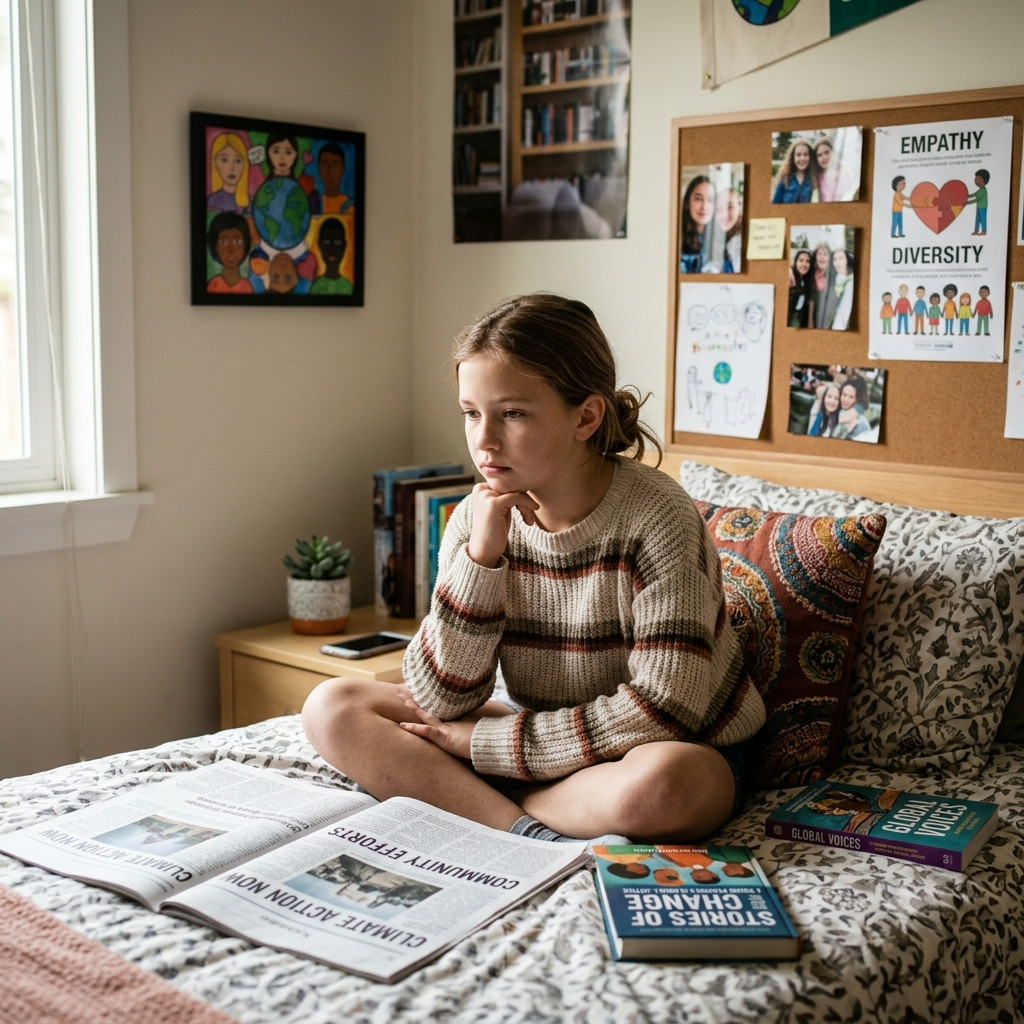
What is actually happening is that a girl is developing moral reasoning in more sophisticated ways. She is learning to see systems and patterns. She is developing empathy and understanding of injustice.
This is growth. This is important development. And yet, it sometimes creates stress in families because a girl's newly developed sense of justice often identifies injustices in her own family and community that adults have become accustomed to.
A girl who previously seemed politically unaware suddenly becomes very aware of fairness. She notices when her sibling gets treated differently. She becomes indignant about inequities at school.
She starts reading about social issues. She develops strong opinions about what is right and wrong.
Parents sometimes find this shift surprising. Where did this come from? Has something happened? Is she okay?
Why Moral Development Shifts During Adolescence
They start noticing patterns of unfairness. They begin understanding that what seems like individual fairness issues are often part of larger systems.
A younger child might notice that one sibling gets more allowance. A tween might notice that the allowance reflects gendered expectations about chores. She might start questioning why her brother is not expected to do the same work.
She is noticing injustice that was always there. She just did not have the cognitive tools to see it before.
Research on moral development has consistently shown that children's ability to understand justice and fairness becomes more sophisticated during the tween years.
A younger child understands fairness in concrete terms. Everyone should get the same thing. Rules should apply equally.
As girls develop, they begin understanding that fairness is sometimes more complicated than equal treatment. Context matters. Need matters. Different people sometimes need different support.
But this more sophisticated understanding often comes with a flip side. Girls also become more aware of systemic injustice.
When Moral Development Creates Family Conflict
This can be uncomfortable for parents. It is one thing to have your daughter develop moral awareness in the abstract. It is another to have her apply that awareness to your family and find you wanting.
Parents sometimes respond by dismissing her concerns. "You do not understand how complicated things are." "That is just how families work." "You are being too idealistic."
While those responses make sense from an adult perspective, they often feel to the girl like her moral concerns are not being taken seriously. Like the injustices she is seeing are not real or do not matter.
One reason this shift sometimes creates stress is that girls often apply their newly developed sense of justice to their own families. And families, like all human systems, contain inequities.
Maybe she notices that her mother does more household labor than her father. Maybe she sees that her brother is given more freedom. Maybe she recognizes that her family's resources are being distributed in ways that do not feel fair to her.
A younger girl might not have noticed these things. A girl developing more sophisticated moral reasoning absolutely notices.
And she often wants to do something about it.
When Idealism Meets Reality
But getting to that balance is not always easy. Many girls go through a phase where they are highly moralistic and relatively inflexible. Everything is right or wrong. Everyone is good or bad. The world should be just and people should behave ethically.
This phase is important. It is where moral development happens. But it can be exhausting for families.
One of the important developmental tasks of adolescence is learning to hold both idealism and pragmatism simultaneously.
A girl can believe that something should be fair while also understanding that the world is complicated and sometimes unfair. She can want things to be better while recognizing that change is gradual. She can hold moral convictions while accepting that people are imperfect.
How to Engage With a Girl's Moral Development
Modeling nuanced thinking. Showing that you can hold a conviction while also understanding perspective.
Not requiring agreement. She does not have to agree with your perspective. But you can require that she treat people with respect while disagreeing.
Channeling her moral energy constructively. Supporting volunteer work, activism, or community service that allows her to express her values.
Parents can support their daughters' developing moral awareness by:
Taking her concerns seriously. Even if you do not agree, taking time to understand why something feels unjust to her.
Having real conversations. "I hear that you think this is unfair. Tell me more about why you see it that way."
Sharing complexity. "I agree that this is not ideal. I also think the situation is complicated because..."

When Moral Rigidity Becomes Concerning
Most girls develop some flexibility in their moral reasoning over time. They learn that people can be complicated. That situations can be nuanced. That doing the right thing is sometimes difficult and requires compromise.
But for some girls, the rigidity persists or intensifies. She becomes judgmental of anyone who does not meet her moral standards. She becomes distressed when people do not behave ethically. She struggles to maintain relationships with people who have different moral values.
In these cases, the moral development, while important, is creating suffering. The girl might benefit from support in developing more flexibility alongside her convictions.
The Protective Aspect of Moral Development
It is worth noting that girls who develop strong moral convictions during the tween years often do better at resisting certain kinds of negative peer pressure.
A girl who has thought through her values and developed convictions about fairness, kindness, and ethical behavior is more likely to resist pressure to be unkind to someone. She is more likely to speak up about injustice. She is more likely to maintain her values even when peers are doing something different.
This is actually protective.
What Parents Can Remember
When a girl becomes more attuned to injustice during the tween years, it is often a sign that her moral reasoning is developing. This is important development, even when it is uncomfortable for the family.
Parents who take her concerns seriously, engage in real conversation about ethics and fairness, and model nuanced moral thinking help their daughters develop into people who care about others and stand up for what is right.
That is valuable, even when it means sitting through some challenging conversations about your own family's shortcomings.
