
The Hidden Cost of Turning Childhood Into Performance
A schedule so full of activities that there is little room left for exploration.
A family culture where achievement receives most of the attention.
None of these moments seem significant on their own.
Over time, however, they can create an environment where girls begin to absorb a powerful message:
Your value comes from what you accomplish.
Most parents would never say those words directly.
Many girls still hear them.
Not because of what their parents believe.
Because of what the environment repeatedly reinforces.
Many parents never intend to put their children under pressure.
In fact, most are trying to do the opposite.
They sign their daughters up for activities because they want them to discover their interests. They encourage strong grades because they want them to have opportunities. They praise achievement because they are proud. They invest time, energy, and resources because they care deeply about their children's future.
The problem is that childhood can slowly become centered around performance without anyone consciously deciding that should happen.
It happens through small moments.
A conversation that focuses on the outcome instead of the experience.
A season that becomes more about results than enjoyment.
When Success Stops Feeling Like Success
The difference matters.
When success is something a girl does, it can be satisfying.
When success becomes who she is, it can feel fragile.
Every outcome begins carrying more weight than it was ever meant to carry. A disappointing grade becomes more than a disappointing grade. A poor performance becomes more than a poor performance. Mistakes begin feeling personal rather than situational.
The issue is not that girls care about doing well.
The issue is what happens when doing well becomes the primary way they understand their worth.
One of the most surprising things parents discover is that achievement does not always produce confidence.
Sometimes it does.
Sometimes it produces pressure.
A girl earns a strong grade and feels proud for a moment. Then her attention immediately shifts to the next assignment. She performs well in a sport but worries about maintaining that performance. She receives recognition for an accomplishment but feels anxious about whether she can do it again.
Parents often assume these reactions are signs of ambition.
Sometimes they are.
Sometimes they are signs that achievement has become tied to identity.
What Research Tells Us About Motivation
She can be highly successful while becoming less certain about what actually matters to her.
She can meet every expectation around her while losing sight of her own internal motivation.
Parents sometimes mistake performance for engagement because the behavior looks positive. The grades are good. The activities continue. The goals are being met.
What they cannot always see is whether the child still feels connected to the experience itself.
That connection matters far more than many people realize.
One of the most important findings in developmental psychology is that people are generally more motivated when they experience a sense of autonomy.
In simple terms, human beings tend to engage more deeply when they feel ownership over what they are doing.
Researchers studying motivation have repeatedly found that external pressure can create compliance, but it does not always create lasting engagement. Children may work harder in the short term when rewards, expectations, or pressure are increased. Over time, however, motivation often becomes dependent on those external forces.
This creates an important distinction.
A girl can be highly productive while becoming less connected to her own interests.

Why More Pressure Often Creates More Anxiety
Girls who feel heavily evaluated often become more cautious, not less. They may avoid activities where success is uncertain.
They may hesitate to take creative risks. They may become reluctant to pursue interests where they are not immediately good.
Parents are often confused by this reaction.
From their perspective, they are encouraging excellence.
From the child's perspective, excellence may feel like a requirement.
When every outcome seems important, experimentation becomes harder.
And experimentation is one of the primary ways children grow.
Many adults operate from an assumption that pressure creates performance.
Sometimes it does.
The problem is that pressure also creates anxiety.
As expectations increase, many girls become increasingly focused on avoiding mistakes. Their attention shifts away from curiosity and toward evaluation. Instead of asking, "What can I learn?" they begin asking, "What if I fail?"
This shift changes the emotional experience of achievement.
Learning becomes riskier.
Trying something new becomes riskier.
Making mistakes becomes riskier.
The Rise of the "Resume Childhood"
Unstructured exploration.
Children need opportunities to pursue interests that are not attached to achievement. They need time to be curious without a measurable outcome. They need experiences that are not constantly evaluated, scored, ranked, or compared.
This is especially important during the tween years, when girls are beginning to figure out who they are.
If every activity becomes a performance, it becomes difficult for a child to discover what she genuinely enjoys.
Instead, she may become highly skilled at identifying what earns approval.
Those are not the same thing.
Over the last several decades, childhood has become increasingly organized.
Many children move from one structured activity to another. Sports, tutoring, music lessons, academic enrichment programs, clubs, camps, and extracurricular opportunities often fill schedules that would have seemed extraordinary to previous generations.
Again, the intention is usually positive.
Parents want to expose their children to opportunities.
They want them to develop skills.
They want them to succeed.
The challenge is that a highly structured childhood can sometimes leave very little room for something equally important.
When Girls Start Performing Instead of Participating
The external behavior can look nearly identical.
The internal experience is completely different.
Participation allows for mistakes, experimentation, and growth.
Performance often creates self-monitoring, anxiety, and fear of failure.
Parents rarely intend to create performers.
Most want children who are engaged, curious, and resilient.
Recognizing this difference can help families evaluate whether achievement is supporting growth or quietly replacing it.
One of the hidden costs of performance-focused environments is that girls sometimes stop participating in experiences and start performing within them.
The distinction is subtle but important.
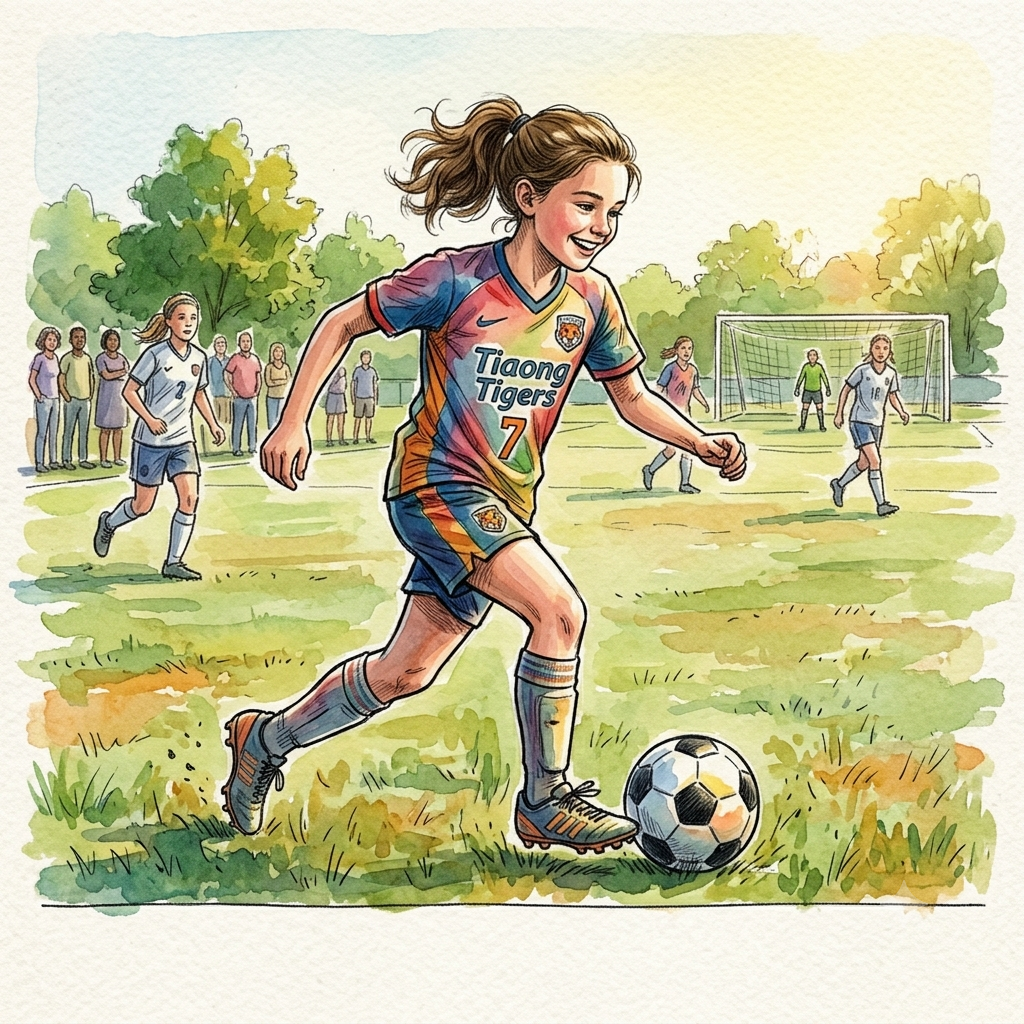
A girl who is participating in soccer is focused on playing.
A girl who is performing in soccer may be focused on proving something.
A girl who is participating in school is focused on learning.
A girl who is performing in school may be focused primarily on maintaining an image.
A girl who is participating in friendships is focused on connection.
A girl who is performing in friendships may be focused on acceptance.
What Support Looks Like Instead of Pressure
Support communicates confidence in a child's ability to grow.
Pressure often communicates concern about outcomes.
Support leaves room for mistakes.
Pressure treats mistakes as threats.
Children can usually feel the difference even when the words sound similar.
This is one reason the strongest parent-child relationships often balance encouragement with acceptance. A daughter understands that effort matters. She understands that growth is important. At the same time, she knows that her value does not rise and fall with every result.
That combination creates security.
And security is one of the most powerful foundations for healthy motivation.
Parents sometimes hear discussions about pressure and assume they are being told to lower expectations.
That is not the message.
Children benefit from expectations.
They benefit from guidance.
They benefit from accountability.
The question is not whether expectations exist.
The question is how they are experienced.
Support says: "I believe you can handle challenges."
Pressure says: "You need to prove yourself."
The Confidence That Lasts
Girls who build confidence exclusively through accomplishment can find themselves chasing a finish line that continues moving.
The confidence that lasts tends to come from somewhere else.
It comes from knowing that mistakes can be survived.
It comes from developing competence through effort.
It comes from discovering interests that exist independent of recognition.
It comes from trusting that worth is not determined by performance.
Those lessons are harder to measure than grades, trophies, or awards.
They are also the lessons many girls carry with them long after childhood ends.
Many parents want their daughters to succeed.
That desire is understandable.
Success can create opportunities. It can open doors. It can help children develop skills and confidence.
The challenge is remembering that confidence built entirely on achievement is often unstable.
There will always be a harder class.
A stronger competitor.
A bigger challenge.
A new standard.

Childhood Was Never Meant to Be a Constant Evaluation
The goal is not raising daughters who stop striving.
The goal is raising daughters who understand that striving is something they do, not who they are.
Because when childhood becomes a performance, girls often learn how to achieve.
When childhood leaves room for growth, they learn something even more important.
How to remain connected to themselves while they do it.
Most parents are not trying to turn childhood into a performance.
They are trying to prepare their children for the future.
The irony is that some of the qualities children need most in the future are developed when they are not constantly being evaluated.
Curiosity develops when exploration is allowed.
Resilience develops when mistakes are survivable.
Self-trust develops when children have opportunities to make choices.
Confidence develops when worth is not tied exclusively to outcomes.
