
The Hidden Relationship Between Puberty and Perfectionism
A girl sits at the kitchen table doing homework.
She finishes the assignment, looks at it for a moment, erases three answers, rewrites them, then starts checking the entire page again.
Nothing is wrong with the work.
The answers were already correct.
But she keeps looking.
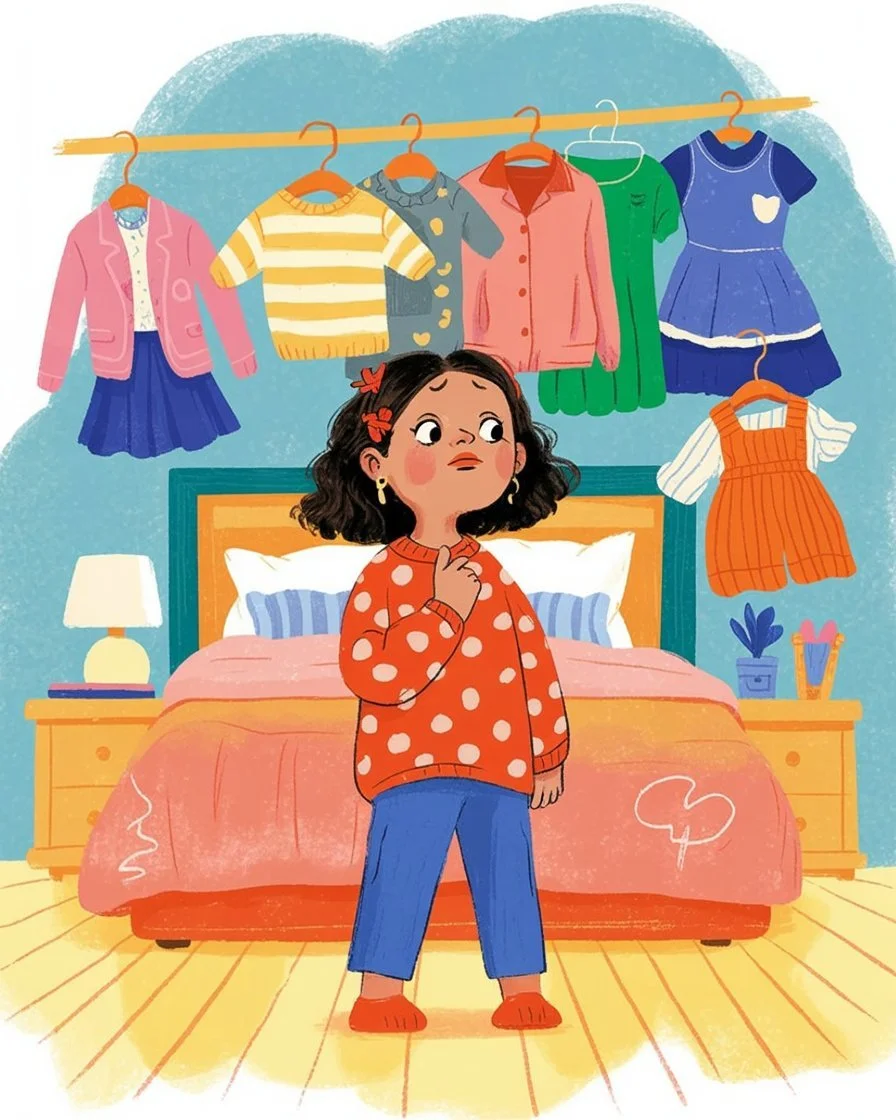
Later that week she changes outfits four times before school. The following weekend she spends ten minutes deciding which photo to post. A month later she becomes unusually upset after receiving a grade that would have made her proud just a year earlier.
Parents often see these moments as unrelated. One seems academic. Another looks social. Another appears connected to appearance. But underneath them is often the same pattern.
Many girls become more perfectionistic during puberty, and the reason has less to do with achievement than most adults assume.
Perfectionism is often described as wanting everything to be flawless. In reality, many tweens are not chasing perfection because they enjoy excellence. They are chasing certainty because uncertainty has started feeling uncomfortable.
Puberty introduces new questions, new expectations, and new forms of self-awareness. For many girls, perfectionism becomes an attempt to manage all of that uncertainty.

Perfectionism Usually Starts as Protection
One of the biggest misconceptions about perfectionism is that it develops because a child is highly ambitious. Sometimes that is true. More often, perfectionism begins as protection.
A girl notices that certain outcomes feel safer than others. Getting the answer right feels safer than getting it wrong. Looking put together feels safer than feeling exposed. Being prepared feels safer than being caught off guard.
Over time, those preferences can slowly become requirements.
The challenge is that the standard keeps moving.
The goal is no longer doing well.
The goal becomes avoiding mistakes.
That shift changes everything.
When children pursue achievement, they are moving toward something. When children pursue perfection, they are often trying to avoid something. Embarrassment. Criticism. Failure. Rejection. Disappointment. The behavior may look identical from the outside, but the emotional experience underneath it is very different.
Why Puberty Creates More Opportunities for Perfectionism
Parents sometimes assume perfectionism is mostly about grades because grades are easy to see. In reality, many girls are trying to perform well across multiple areas simultaneously.
School.
Friendships.
Appearance.
Sports.
Social standing.
Behavior.
Family expectations.
When enough areas begin feeling important at once, the pressure to get everything right can quietly grow.
Puberty changes more than bodies.
It changes awareness.
Girls begin noticing social dynamics they may have overlooked before. They become more aware of appearance, friendships, belonging, and peer approval. Situations that once felt simple suddenly contain more variables.
A classroom presentation is no longer only about speaking in front of the class.
It may also involve wondering how she sounds, how she looks, what classmates think, whether she appears confident, and whether she might embarrass herself.
The event itself has not changed.
The amount of self-evaluation happening inside it has.
This is one reason perfectionism often increases during the tween years. The number of things a girl believes she should manage expands dramatically.
Why Perfectionistic Girls Often Look Successful
Perfectionism can be difficult to recognize because many perfectionistic children appear highly capable.
They complete assignments. Follow rules. Meet expectations. Stay organized. Work hard.
Adults often receive positive feedback about them.
The challenge is that external success can hide internal strain.
Parents may see accomplishment while missing the amount of anxiety required to produce it.
A girl might receive an excellent grade and spend the entire evening worrying about the one answer she missed.
She might perform beautifully in a recital and spend the car ride home replaying a tiny mistake nobody else noticed.
She might be complimented by teachers while privately feeling as though she is constantly falling short.
The more successful a perfectionistic child becomes, the easier it can be for adults to assume everything is fine.
Sometimes the opposite is true.
The Difference Between High Standards and Perfectionism
Having high standards is not a problem.
A girl who studies for a test, practices a skill, or works hard on a project is not automatically becoming perfectionistic.
The difference often appears in how she responds when things do not go according to plan.
A child with healthy standards can usually tolerate mistakes, even when she dislikes them.
A perfectionistic child often experiences mistakes as evidence about herself.
A poor grade becomes proof she is failing.
An awkward moment becomes proof she is embarrassing.
A disagreement with a friend becomes proof she is unlikeable.
The event itself becomes larger because it gets attached to identity.
That is where perfectionism becomes emotionally exhausting.
Mistakes stop being experiences.
They become verdicts.

When Perfectionism Shows Up Outside of School
One reason perfectionism is frequently misunderstood is that people tend to associate it with academics.
For many girls, however, perfectionism appears most clearly in everyday life.
A girl spends twenty minutes choosing clothes for an ordinary school day.
She deletes photographs repeatedly.
She becomes unusually upset when plans change unexpectedly.
She asks for reassurance over and over, not because she does not hear the answer, but because certainty never lasts very long.
Parents sometimes interpret these behaviors as vanity, stubbornness, or excessive sensitivity.
Often they are seeing a child trying to reduce uncertainty.
The repeated checking is not always about appearance.
The distress is not always about the actual situation.
Many perfectionistic behaviors are attempts to feel secure.
Unfortunately, they rarely create lasting security.
They create temporary relief.
Then the uncertainty returns.
What Parents Often Accidentally Reinforce
Most parents want to support their children, which is why some perfectionistic patterns can develop unintentionally.
Imagine a girl receives praise every time she performs exceptionally well. Over time she may begin associating approval with performance.
The issue is not praise itself. Children need encouragement.
The issue is when achievement receives attention while effort, resilience, flexibility, and recovery receive far less.
Eventually a child may begin believing that success earns connection while mistakes threaten it. Few parents intentionally teach this lesson. Many perfectionistic children absorb it anyway.
That is why it helps to notice more than outcomes. Notice adaptability. Notice persistence. Notice how a girl handles disappointment. Notice when she keeps going after something becomes difficult.
Those qualities support confidence more effectively than perfection ever can.
Helping Girls Build Something Stronger Than Perfection
Parents often ask how to stop perfectionism.
A more useful goal is helping girls build confidence that does not depend on perfection.
That starts by paying attention to the fears underneath the behavior.
Is she afraid of failure?
Embarrassment?
Disappointment?
Judgment?
Exclusion?
The answers matter because perfectionism is usually protecting something.
When adults only address the behavior, they often miss the concern underneath it.
When they understand the concern, conversations become more productive.
A girl who fears embarrassment needs something different than a girl who fears disappointing others.
A girl who fears rejection needs something different than a girl who fears losing control.
The behavior may look similar.
The emotional need is not.
Helping girls understand this difference gives them something perfectionism never can.
A sense of security that remains intact even when life becomes messy.
Because adolescence is messy.
Friendships change.
Plans fall apart.
Mistakes happen.
Confidence is not learning how to avoid all of those experiences.
It is learning how to remain yourself inside them.
Confidence and Perfectionism Move in Different Directions
At first glance, confidence and perfectionism can look similar.
Both may involve preparation.
Both may involve effort.
Both may involve strong performance.
The difference appears when things go wrong.
Confidence allows a girl to remain connected to herself even after a mistake.
Perfectionism often makes mistakes feel personally threatening.
A confident child thinks, "That did not go the way I wanted."
A perfectionistic child often thinks, "What does this say about me?"
That distinction becomes increasingly important during adolescence because mistakes become unavoidable.
Friendships become complicated.
School becomes harder.
Social situations become less predictable.
No amount of preparation can remove every uncomfortable experience.
Eventually, every girl encounters situations she cannot control.
The girls who weather those moments best are rarely the ones who never make mistakes.
They are usually the ones who learn that mistakes do not define them.