
What Parents Often Miss When a Tween Suddenly Becomes Irritable
A girl walks through the front door after school, drops her backpack on the floor, and immediately snaps at the first person who talks to her.
The exchange may be small. A parent asks how her day was. A sibling says something harmless. Someone reminds her about homework. Suddenly she is annoyed, defensive, or unusually sharp. For many parents, these moments feel confusing because the reaction seems larger than the situation itself.
It is easy to focus on the irritation because irritation is the part everyone sees. It is loud enough to notice. It changes the tone of the room. It often feels disrespectful. But when parents focus only on the irritability, they sometimes miss the more useful question.
What happened before it?

A girl may spend the entire school day worrying whether a comment she made sounded awkward. She may feel embarrassed in gym class. She may feel tense with a friend. She may spend hours uncertain about where she stands socially. None of those concerns necessarily show up when they happen. Many girls continue through the day, attend class, complete assignments, and appear completely fine on the outside.
Then they get home.
The backpack hits the floor.
Someone asks a routine question.
And all the emotional effort required to hold everything together starts to run out.
That is one reason after-school irritability is so common. Home is often the first place where a girl no longer has to maintain the emotional control she kept throughout the day.
This does not mean every irritated child is overwhelmed. It does mean parents benefit from considering possibilities beyond attitude problems.
One of the biggest mistakes adults make during the tween years is assuming that irritability is the primary problem. Often it is not. More often, it is a signal. It is the visible part of an emotional experience that started somewhere else.
As children move through puberty, they begin navigating situations that require more social awareness, more self-consciousness, and more emotional interpretation than they did just a few years earlier. School becomes more socially complex. Friendships become less predictable. Appearance becomes more noticeable. Peer approval begins carrying more emotional weight. None of these changes automatically create conflict, but together they create more opportunities for emotional overload.
The result is that many girls arrive home carrying experiences they have not fully processed yet.
Parents often imagine emotional overwhelm as sadness or tears. In reality, overwhelm frequently arrives wearing different clothes. It looks like impatience. It looks like eye rolling. It looks like arguing about something insignificant. It looks like a child who seems determined to be upset about everything.
The difficulty is that the behavior often seems disconnected from its source.

When adults assume irritability is simply defiance, they often respond with correction before understanding. When adults recognize that irritation may be carrying information, they are more likely to respond with curiosity first and correction second.
That distinction can dramatically change the outcome of a conversation.
Another reason irritability becomes more common during the tween years is that girls are experiencing emotional contradictions they often cannot explain clearly.
A girl may desperately want independence while simultaneously wanting reassurance.
She may want privacy while also feeling lonely.
She may want to fit in while wanting to be accepted for who she already is.
She may want attention from peers while feeling uncomfortable when attention arrives.
Those contradictions create emotional tension. Emotional tension creates frustration. Frustration often emerges as irritability because irritation is easier to express than uncertainty.
One of the most useful shifts a parent can make is learning to look for emotional timing instead of focusing exclusively on emotional intensity.
Imagine two scenarios.
In the first, a girl becomes irritated after being asked to unload the dishwasher. The parent sees only the moment itself and concludes that she is overreacting to a simple request.
In the second, the parent notices that the irritation appeared after a difficult day, immediately after soccer practice, following a disagreement with a friend, and during a week when several other emotional stressors were already present.
The behavior may look identical in both situations. The interpretation becomes very different.
This does not excuse disrespectful behavior. Understanding behavior is not the same thing as accepting it. Parents still need boundaries. Expectations still matter. But interpretation changes how those boundaries are delivered.
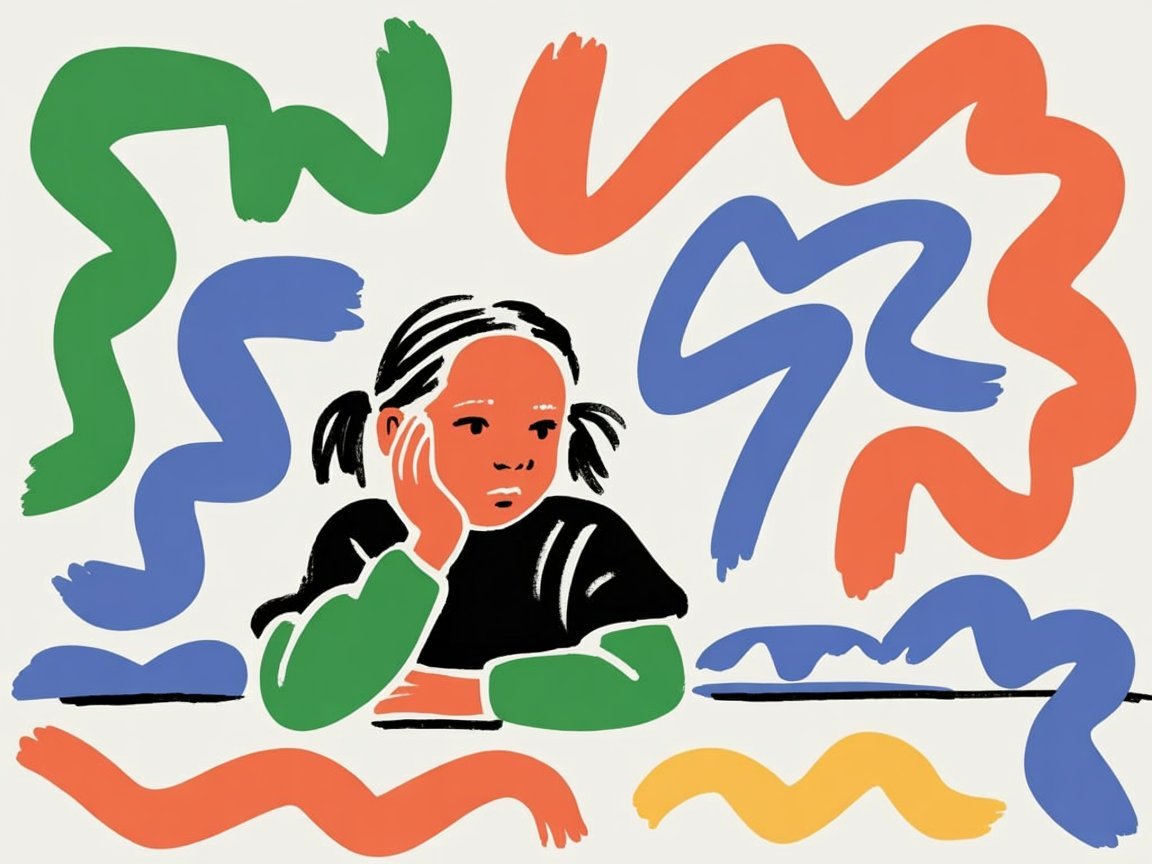
One of the most overlooked clues is emotional displacement. Emotional displacement happens when the real source of distress feels difficult to address directly, so frustration gets redirected somewhere safer.
For example, a girl who feels embarrassed by something that happened at school may come home and become unusually upset about a missing charger. The charger is not actually the problem. It simply becomes the place where accumulated frustration finally lands.
Adults do this too.
Many parents have experienced stressful days where a minor inconvenience suddenly feels much bigger than it should. The inconvenience is real, but it is carrying emotional weight from several other experiences that came before it.
The same thing happens with children.
Recognizing displacement helps parents avoid getting trapped in arguments about surface-level issues while missing the deeper concern underneath them.
This is also where many conversations go wrong.
Many adults remember their own adolescence as a period filled with emotional intensity. What they sometimes forget is how difficult it was to identify what they were actually feeling in the moment.
A tween may know she feels upset without understanding whether the source is embarrassment, disappointment, exclusion, anxiety, exhaustion, self-consciousness, or some combination of all five. When emotions remain unclear internally, they often appear externally as generalized irritation.
Parents can help by paying attention to patterns rather than isolated incidents.
Does the irritability appear after school?
Before social events?
After spending time online?
Following interactions with a particular friend group?
Around situations involving appearance, performance, or peer evaluation?
Patterns frequently reveal what individual moments cannot.

Parents understandably want information.
How was your day?
What happened?
Why are you upset?
Unfortunately, those questions often arrive before a girl has processed the experience herself. When someone cannot clearly identify what they are feeling, direct questions can feel overwhelming rather than helpful.
That is why observations are often more effective than interrogations.
Instead of asking, "What's wrong with you?" a parent might say, "You seem more frustrated than usual today."
Instead of demanding explanations, a parent might notice, "Something feels different about today."
Observations create room.
Questions sometimes create pressure.
That distinction matters because many tweens need space to understand their emotions before they can explain them.
Parents also benefit from remembering that emotional development is not a straight line. A girl who handled disappointment well last month may struggle with it this month. A child who appeared mature in one situation may seem surprisingly reactive in another.
That inconsistency is not necessarily evidence that something is wrong.
Development often looks uneven from the outside.
Skills appear.
Disappear.
Return.
Strengthen.
Then temporarily disappear again.
This can be frustrating for adults because progress rarely follows a predictable path. But inconsistency is often part of growth rather than evidence against it.
The goal is not eliminating irritability altogether. No child reaches adolescence without experiencing frustration, emotional overload, or difficult days. The goal is helping parents interpret those moments accurately enough to respond effectively.
When a girl suddenly becomes irritable, the behavior itself deserves attention. But it should not be the only thing receiving attention.
The more useful question is often not, "Why is she being difficult?"
The more useful question is, "What might have happened before this?"
That question does not remove accountability. It does not excuse hurtful behavior. It does not mean every bad mood has a hidden explanation.
What it does is help parents look beyond the surface.
And during the tween years, the surface is often the least informative part of the story.