
Period Cramps in Tween Girls: What They Can Feel Like, What May Help, and When to Call a Doctor
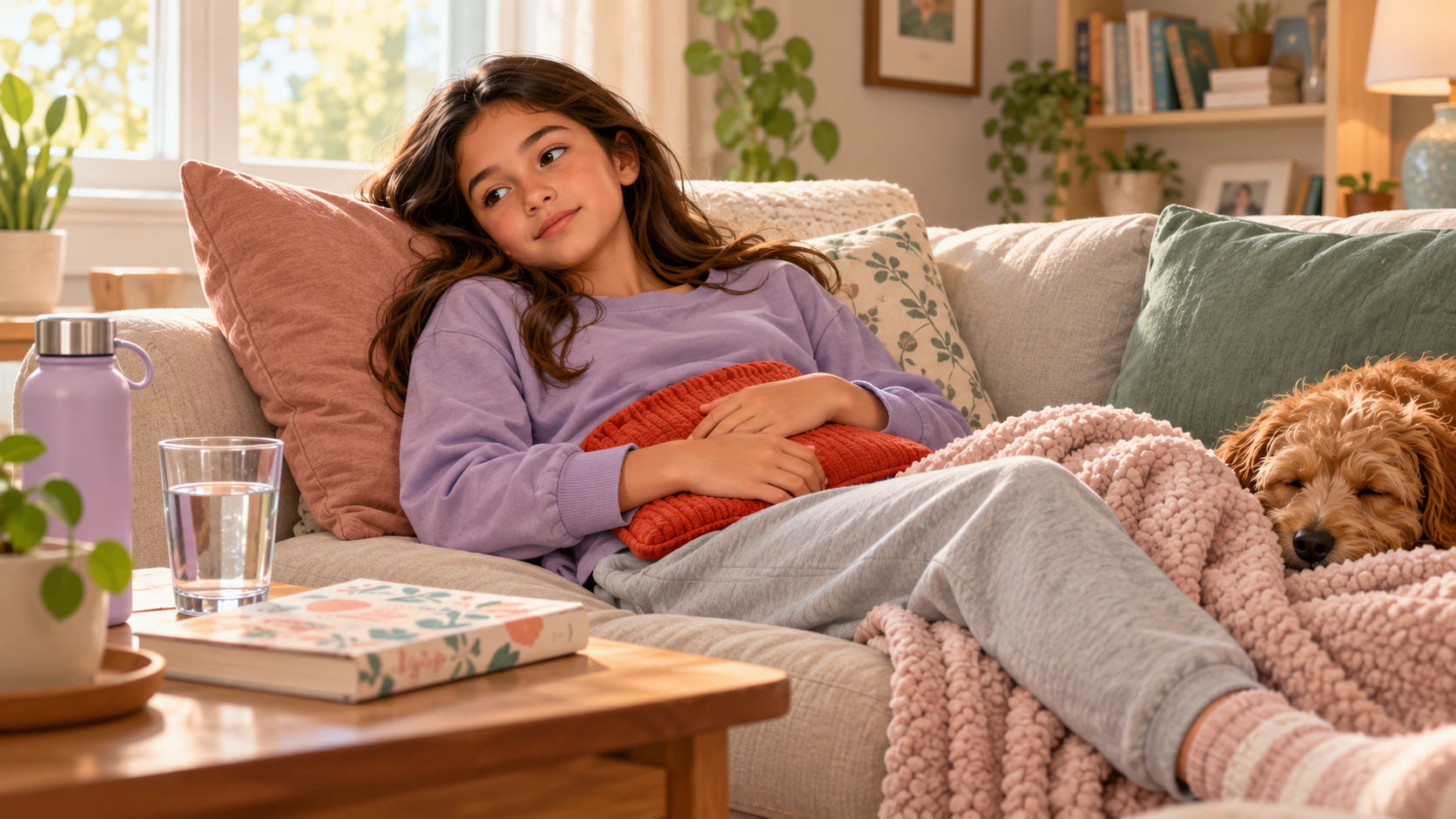
A girl says her stomach hurts before school. That description can mean many things, including hunger, nerves, illness, needing the bathroom, or menstrual cramps she does not yet recognize.
The first few times cramps happen, girls may not connect the discomfort with their menstrual cycle. They simply know they feel uncomfortable, and the sensation may be unfamiliar enough to make them worry.
Understanding what menstrual cramps can feel like gives a girl language for what is happening. It also helps parents respond without either dismissing the pain or treating every cramp as alarming.
What Period Cramps Can Feel Like
Menstrual cramps often occur in the lower abdomen and may feel achy, tight, heavy, or cramp-like. Some girls also feel discomfort in the lower back or upper legs.
The intensity varies. One girl may notice mild discomfort and continue with her day. Another may want to lie down with a heating pad and avoid moving much for a while.
Both experiences deserve accurate language. Calling every cramp “nothing” teaches a girl to dismiss pain, while treating every cramp as an emergency can make an ordinary body process feel frightening. The useful middle is observation.
Where does it hurt? How strong is it? How long does it last? Can she participate in school and ordinary activities? Those details help her understand her body and give a medical professional better information if symptoms become concerning.
Why Menstrual Cramps Happen
During menstruation, the uterus contracts as it sheds its lining. Substances called prostaglandins are involved in those contractions and can contribute to menstrual pain.
A tween does not need a detailed science lecture to understand this. She can know that the uterus is a muscle and that cramping is connected to what the uterus is doing during a period.
That explanation can make the sensation less mysterious. It also helps separate common menstrual discomfort from the idea that pain should simply be endured regardless of severity.
Start With Simple Comfort Measures
Heat can be comforting for menstrual cramps. A warm heating pad, safely used hot-water bottle, or warm bath may help some girls.
Gentle movement can also help certain people, even when getting off the couch is not the first idea she enthusiastically supports. Rest, hydration, and regular meals matter too, especially if she has gone through a long school day without eating much.
Different bodies respond differently. The goal is not to insist that one remedy should work for every girl. Help her notice what actually reduces discomfort.
That process builds body awareness. Instead of being told what she is supposed to feel, she learns to recognize what her own body responds to.
What About Pain Medication?
Over-the-counter pain medicines are sometimes used for menstrual cramps, but the right medicine and dose depend on age, weight, medical history, allergies, other medications, and individual circumstances.
Parents should follow product labeling and guidance from their child’s pediatrician or another qualified medical professional. Do not give a tween medication based only on what works for another family member.
If cramps are frequent enough that medication is regularly needed, that is also useful information to share with her clinician. This article is educational and does not replace medical advice.
Track Pain Without Turning It Into Homework
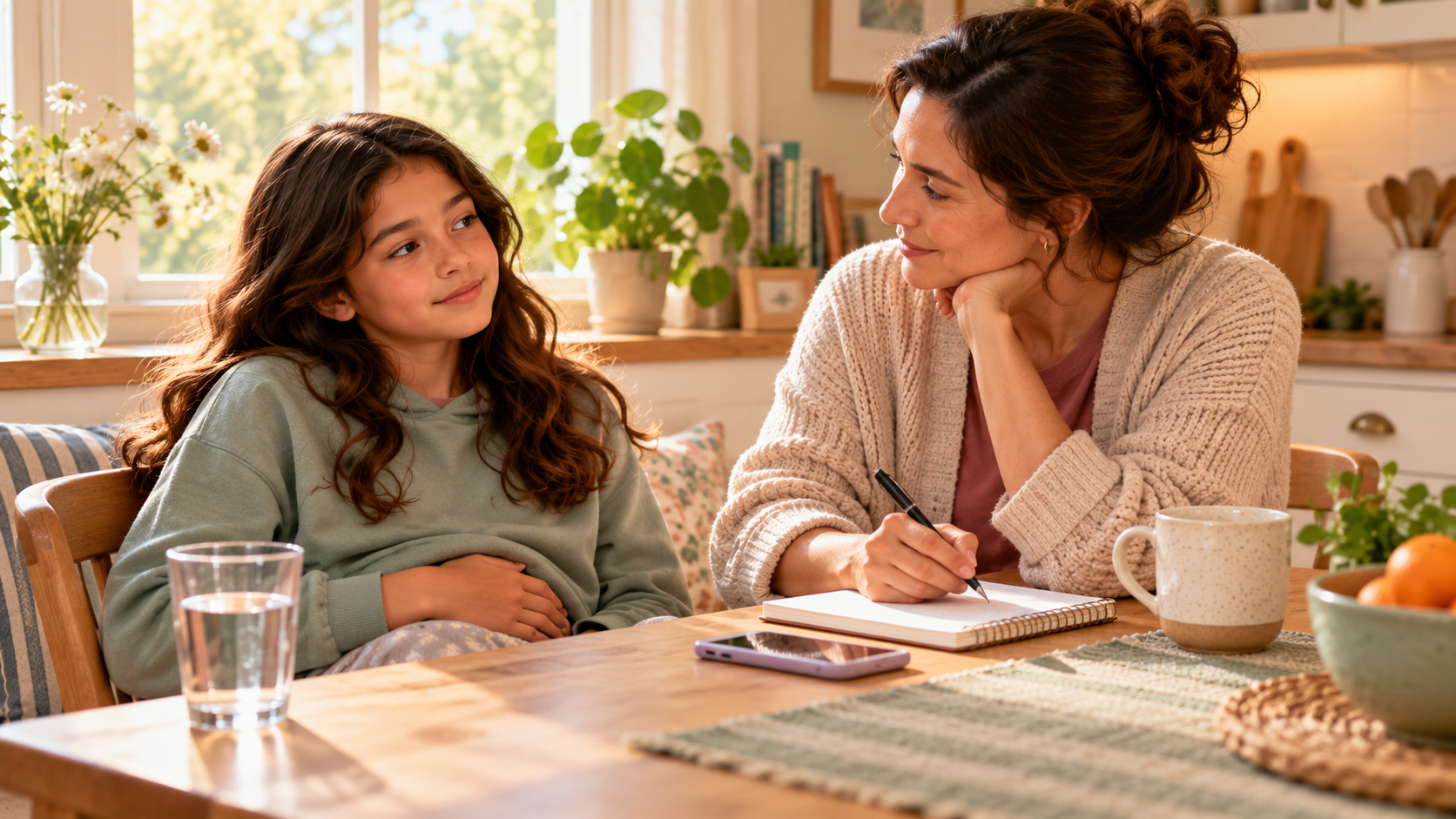
If cramps happen repeatedly, a simple record can help. She might note when the pain starts, whether it happens before or during bleeding, how strong it feels, what she tried, and whether it interfered with school, sports, sleep, or other activities.
You are looking for a pattern, not a perfect record. A few words in a phone note can be enough. She does not need to produce a chart detailed enough for a research study.
The useful question is whether menstrual pain is manageable or whether it is repeatedly interfering with her life. That distinction helps parents know when to seek medical advice.
When Period Pain Should Be Discussed With a Doctor
Significant menstrual pain deserves attention. Contact your child’s pediatrician or adolescent medicine clinician if cramps are severe, regularly cause missed school or activities, suddenly become much worse, or do not improve with recommended measures.
Seek medical advice as well if your daughter has very heavy bleeding, fainting, severe dizziness, fever, unusual discharge, or pain that does not seem connected to menstruation. A clinician can evaluate whether symptoms are consistent with common menstrual cramps or whether another cause should be considered.
Girls should not be taught that severe pain is simply the price of having a period.
Avoid Turning Pain Into a Character Test
Some families attach personality judgments to pain tolerance without realizing it. One child gets called tough. Another gets called dramatic.
Pain is individual. Comparing sisters, friends, or parents teaches a girl that her job is to prove the sensation deserves attention.
You can be calm without being dismissive. “You’re hurting. Let’s figure out what usually helps and pay attention to whether this is interfering with your day” keeps the focus on the physical experience.
That response does not inflate the pain, and it does not minimize it. It treats the body as information.
Help Her Describe What She Feels
Puberty brings sensations girls have never experienced before. Part of body literacy is learning how to describe them.
Is the pain annoying but manageable? Does it make concentrating difficult? Does she need to stop what she is doing? Does it wake her from sleep or make standing difficult?
Those differences matter. A girl who can describe symptoms clearly is better positioned to ask for appropriate help.
That skill becomes increasingly important as she gets older and begins handling more medical conversations herself.
School Needs a Plan Too
Cramps do not always wait for a weekend. If your daughter experiences menstrual pain at school, make sure she knows what support is available.
That might include visiting the nurse, using an approved heat option, taking medication according to school policy and medical guidance, or contacting a parent if symptoms become difficult to manage.
She should not have to choose between silently enduring significant pain and making a dramatic exit from class. A plan reduces that all-or-nothing feeling.
Period Pain Should Become Information, Not Identity
A girl who has one painful period may start dreading the next month. That makes sense because pain teaches anticipation quickly.
But one difficult cycle does not tell her exactly what every future period will feel like. Help her gather information instead. What happened this time? What helped? What changed? Does a clinician need to know?
That approach keeps attention on her actual body rather than on a frightening prediction. Puberty contains enough uncertainty already. Clear information gives her something steadier to work with.