
Period Leaks at School: How to Help a Tween Girl Handle the Part She Is Actually Afraid Of
A period leak is physically small. At school, it can feel enormous because the fear is rarely about the blood itself. The fear is that someone else will see it before she can fix it.
A girl may sit through class wondering whether the dampness she feels is real. She shifts in her chair, pulls her sweatshirt lower, checks the time, and starts planning how to reach the bathroom without turning around in front of anyone. The body problem may be manageable. The social exposure is what makes the moment feel urgent.
Parents often prepare girls for menstruation by explaining what a period is and how period products work. Those facts matter, but many girls are thinking about a different question: “What do I do if I bleed through my clothes at school?” Answering that question ahead of time gives her something useful to do when embarrassment makes thinking harder.

Why Period Leaks Feel So Social
Puberty changes the body at the same time girls become more aware of other people’s attention. A stain is not painful, but it is visible. That visibility can make a normal menstrual accident feel like a public event.
She may imagine classmates noticing before she does, whispering, pointing it out, taking a picture, or remembering it later. None of those things has to happen for the fear to feel convincing. The possibility is enough to make her sit differently or avoid standing up.
Telling her that “everyone gets periods” does not fully address that worry. She already knows menstruation is common. What she is trying to figure out is how to handle a moment when something private becomes visible.
Build a Small School Period Kit
A period kit does not need to look like medical luggage. A small zippered pouch can hold a few period products, clean underwear, and a small opaque bag for soiled clothing if needed. Depending on school rules and personal preference, she might also keep leggings or shorts in her locker or backpack.
Keep the system simple enough that she can maintain it herself. If the kit requires weekly inspection, a checklist, and seven emergency categories, it becomes another project adults manage for her.
The purpose is straightforward. If something happens, she has what she needs. The kit works best when it reduces mental effort rather than creating another routine she can forget to do correctly.
Give Her an Actual Leak Plan
“Go to the bathroom” is not a full plan if she is sitting in class and afraid to stand up. Talk through the sequence before she needs it.
If she thinks she leaked, she can ask to use the restroom. If she needs help, she can go to the nurse, counselor, office, or another staff member. If there is a stain, she can change if she has extra clothes or call home if necessary.
She can tie a sweatshirt around her waist if that makes her more comfortable while getting help. That is not teaching her to be ashamed. It is giving her a temporary tool while she handles the problem.
Most importantly, she does not need to sit through an entire class because she is embarrassed to tell an adult she needs the bathroom. Girls sometimes need explicit permission to solve a body problem instead of protecting everyone else from knowing they have one.
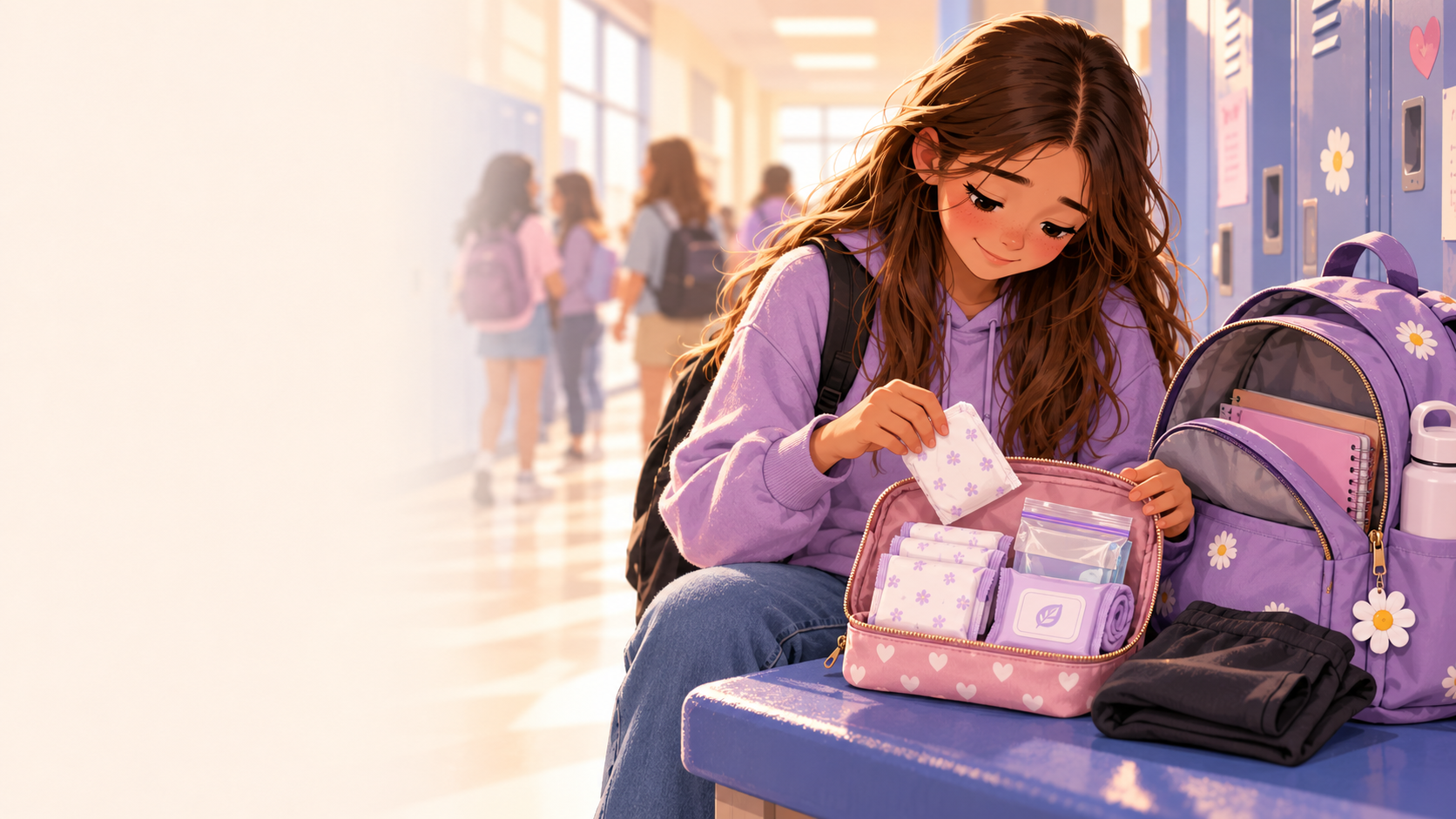
Know the School’s Rules Before She Needs Them
Schools handle bathroom access, nurses’ offices, spare clothing, and period products differently. Find out where students can get supplies if they run out and what she should do if a teacher limits bathroom passes.
You do not need to turn this into a formal family briefing. A few clear facts are enough. She should know whether the nurse has pads, where spare clothing is available, and what to say if she needs to leave class urgently.
Prepared girls do not need every situation to go perfectly. They need to know what the next move is when it does not.
Avoid Making a Leak Into a Shame Emergency at Home
Suppose she comes home with underwear wrapped in a plastic bag. Your reaction matters because the way adults respond teaches her whether menstrual accidents are manageable or embarrassing.
If the first response is disgust, panic, or interrogation about why she did not change her pad earlier, she may hear that she was supposed to manage menstruation perfectly. But period management takes practice. Flow changes, products shift, classes run long, and a pad that seemed fine earlier may no longer be enough.
Solve the practical problem. Show her how stained fabric can be handled if appropriate, replace anything that is missing from her kit, and adjust the plan if needed. Then move on. A leak is an inconvenience, not evidence of irresponsibility.
If Someone at School Notices
This is often the part girls fear most. If another student quietly tells her she has a stain, that can actually be useful. If somebody laughs or makes a comment, the problem is the behavior of the person making the comment, not menstruation.
She does not need a perfect comeback. She can say, “I know,” and leave. She can ignore the comment. She can go directly to an adult. The goal is not teaching her to look completely unaffected.
She may be embarrassed. That is allowed. What matters is learning that embarrassment and competence can exist at the same time. She can feel exposed and still solve the problem.
Consider Dark Clothing Without Teaching Her to Hide
Some girls prefer darker pants or shorts when they expect their period. There is nothing wrong with using clothing strategically if it reduces distraction.
The framing matters. “Wear black so nobody knows” teaches concealment. “If dark pants make you feel less distracted today, wear them” supports comfort.
She should not have to prove she is fearless about menstruation. She gets to choose what helps her move through the day with less mental noise.
The Real Confidence Lesson Happens After Something Goes Wrong
Girls often think confidence means preventing embarrassing situations. Period leaks are a useful reminder that some uncomfortable moments cannot be fully controlled.
What she can control is what happens next. She notices the problem, finds a bathroom, changes what she can, asks for help if necessary, and returns to her day. She may still feel embarrassed when she goes back to class.
That does not erase the competence involved in handling it.
Parents can help girls by focusing less on preventing every uncomfortable moment and more on making sure they know what to do when one happens. Confidence becomes more durable when it does not depend on everything going right.