
Why Girls Start Criticizing Themselves Earlier Than Most Parents Realize
A girl is sitting at the kitchen table looking through school pictures. She pauses on one photo. Not for long. Just long enough to zoom in. Then zoom in again. She is nine.
Nobody has taught her how to analyze a picture of herself. Nobody sat her down and explained how to evaluate her smile, compare her body to someone else's, or decide whether she looks good enough in a photograph.
And yet there she is. Studying herself. That moment often catches parents off guard because most people imagine self-criticism arrives later. Middle school. Social media. Dating. Teenage years. But self-criticism usually starts showing up long before parents hear it spoken out loud. It appears first in behavior. Not language
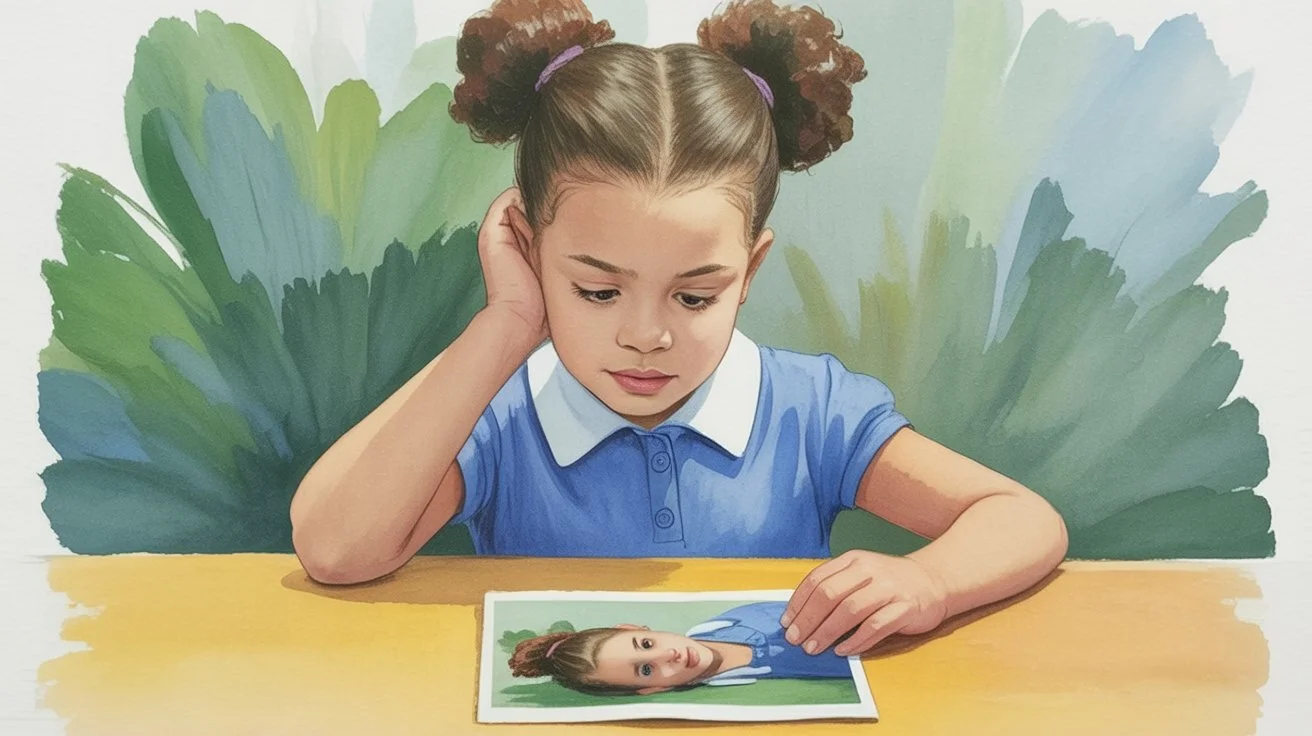
A girl may not say, "I don't like how I look." Instead she deletes a photo. Changes shirts three times before school. Asks where everyone else is sitting in the class picture. Wants to know whether her hair looks weird. Suddenly cares who stands next to her in a group photo. Those behaviors often appear before the words.
Parents sometimes miss these moments because the behaviors seem small.
A different outfit.
A second look in the mirror.
A little extra attention to appearance.
Nothing dramatic. Nothing alarming.
But small behaviors often reveal larger emotional shifts. Especially during the tween years.
A few months later she starts wondering whether other people are noticing what she is wearing.
The behavior can be difficult to recognize because part of it is developmentally normal.
Children naturally become more aware of themselves as they get older.
The challenge is that awareness and self-evaluation are not the same thing.
Awareness says:
"My hair looks different today."
Self-evaluation says:
"My hair looks wrong today."
Awareness notices.
Self-evaluation judges.
That distinction matters.
Because confidence is not the absence of awareness.
It is the absence of constant judgment.
Self-Criticism Rarely Arrives All At Once
Most parents expect insecurity to look obvious.
They expect sadness.
Withdrawal.
Tears.
What often appears instead is observation.
A girl begins noticing herself more.
Then evaluating herself more.
Then comparing herself more.
The progression is usually gradual.
One day she notices a classmate's hair.
Another day she notices her own.
One week she wants a certain pair of shoes.
The Age Where Everything Starts Getting Compared
One of the most significant shifts during the tween years is that girls begin comparing themselves across categories that never seemed important before.
Height. Clothes. Friendships. Grades. Athletic ability. Hair. Skin. Popularity. Body shape. Social standing.
What makes this difficult is that comparison rarely stays inside one category.
A girl who feels uncertain about one area often starts evaluating herself more broadly. The issue is not simply appearance. The issue is self-worth becoming attached to evaluation.
Parents often notice this indirectly. Their daughter suddenly wants information she never cared about before. Who is going? What are they wearing? How many people are coming? Did everyone get invited? What did she get? How many followers does she have?
At first glance, these seem like unrelated questions. But underneath many of them is the same concern. "Where do I fit?"
Why Girls Become More Aware Of Themselves
This is where many adults accidentally misunderstand what is happening.
A girl does not become more self-conscious because she suddenly becomes shallow. She becomes more self-conscious because social awareness is expanding.
The world gets bigger.
Peer relationships become more important.
Belonging becomes more complicated.
Identity becomes less certain.
Those changes create new opportunities for comparison. And comparison creates opportunities for self-criticism.
The girl who never cared about her outfit in second grade may suddenly care deeply in fifth grade. Not because clothing became more important. Because belonging became more important. That distinction changes how parents interpret behavior. The outfit is not always the issue. The fear of standing out may be. The hairstyle is not always the issue. The fear of being evaluated may be.
The complaint is often visible. The concern underneath it is usually quieter.
Self-Criticism Is Often Learned Through Observation
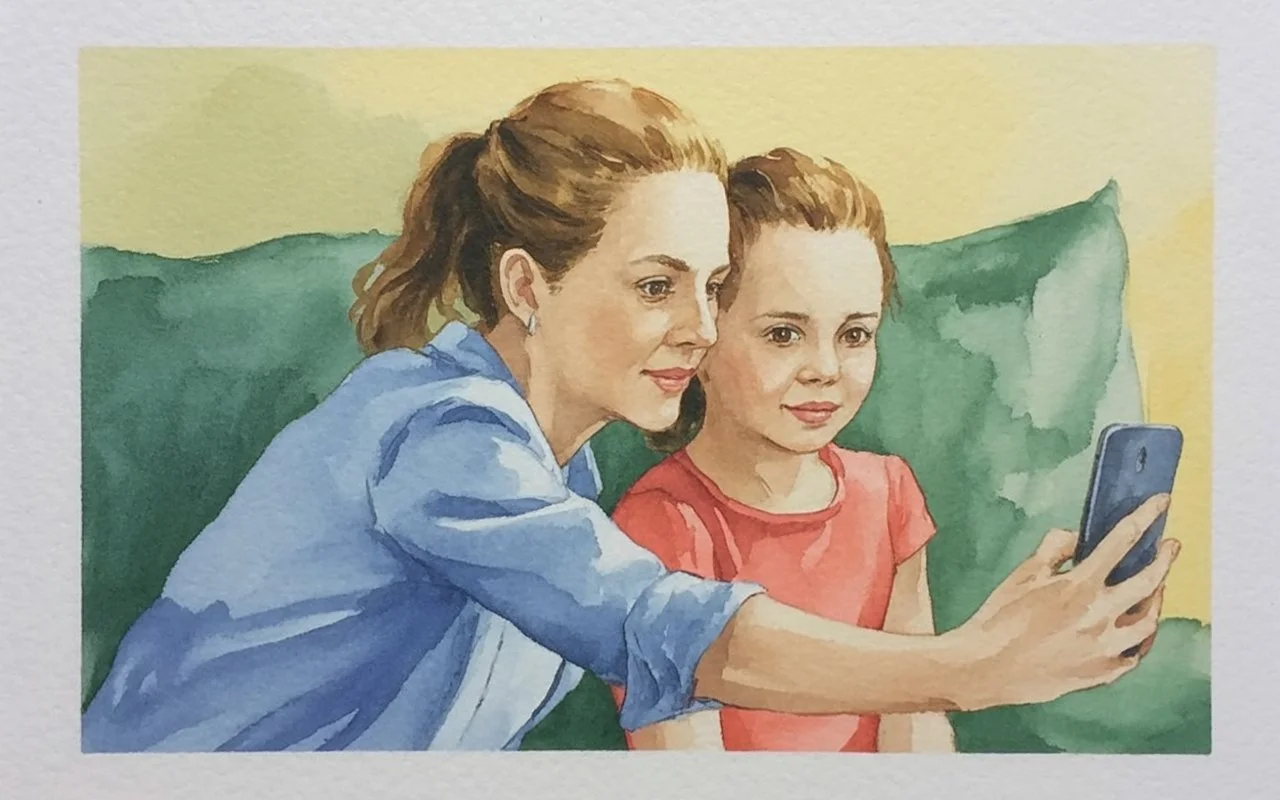
Years ago, my stepdaughter took a selfie of us. Cute picture. And almost immediately, I started criticizing myself out loud.
I pointed out my stomach. Said I looked tired. Said I hated the picture. She stood there listening.
The moment bothered me afterward. Not because I intended to teach anything. But because children learn what deserves criticism by listening to what adults criticize.
Girls hear us talk about ourselves before they ever hear us talk about confidence. They hear us discuss our appearance.
Our weight.
Our aging.
Our flaws.
Our mistakes.
Our bodies.
And over time they absorb the lesson. Not necessarily the words. The pattern.
What receives attention.
What receives judgment.
What receives criticism.
This does not mean parents must become perfect. No child grows up around perfect adults. That is not the goal. The goal is awareness. Because self-criticism is often modeled long before it is discussed.
What Parents Often Miss
One of the most overlooked signs of growing self-criticism is increased self-monitoring.
A girl starts checking herself more frequently. Not necessarily because she dislikes herself. Because she is trying to make sure nothing is wrong.
That distinction matters.
Many parents interpret repeated checking as vanity. Often it is anxiety. The girl checking her hair six times before school is not always focused on appearance. Sometimes she is focused on avoiding embarrassment. The girl retaking a photo fifteen times is not always chasing perfection. Sometimes she is trying to avoid criticism. The behavior looks the same. The motivation underneath it can be very different.
Understanding that difference changes the conversation.
Confidence Is Not The Opposite Of Self-Criticism
Many people imagine confidence means liking everything about yourself. That is not how confidence works.
Confident people notice flaws.
Confident people experience embarrassment.
Confident people have insecurities.
The difference is that those experiences do not become the center of every interaction.
Confidence allows a girl to remain present even when she feels imperfect. Self-criticism pulls her attention back toward herself. Over and over again.
Did I say something weird?
Do I look okay?
Was that embarrassing?
What are they thinking?
The more attention pulled inward, the harder it becomes to participate outwardly. That is one reason self-criticism can quietly affect friendships, school participation, and willingness to try new things. Not because insecurity prevents action. Because constant self-monitoring consumes attention.
What Helps More Than Reassurance
Parents often respond to self-criticism with reassurance.
"You look beautiful."
"You're fine."
"Nobody notices."
Sometimes those responses help. But they do not always address the underlying concern.
If a girl is worried about belonging, reassurance about appearance may miss the target. If she is worried about being judged, reassurance about attractiveness may not reduce the fear. Interpretation often helps more than immediate reassurance.
You might notice:
"You seem like you've been thinking about that picture a lot."
Or:
"You've checked your outfit a few times. Are you worried about something at school?"
Those observations invite discussion. They focus on behavior. They communicate attention. And they leave room for the real concern to emerge.
The Goal Is Not To Eliminate Self-Consciousness
Every girl will experience self-consciousness. Every girl will compare herself at some point. Every girl will have moments where she worries about how she looks, how she sounds, or where she fits.
The goal is not removing those experiences. The goal is helping them take up less space.
Helping a girl understand that noticing herself is different from constantly evaluating herself. Helping her recognize that comparison is something her brain does, not something she must obey. Helping her build a sense of self that remains intact even when insecurity shows up.
Because insecurity is not the problem. Believing insecurity deserves the final word is.
And that difference often begins with noticing the small moments. The second look at the photo. The outfit change. The repeated checking. The quiet evaluation happening long before the criticism is spoken out loud.
Those moments are usually where the story starts. Not where it ends.