
When Your Daughter Comes Home Upset About a Friend
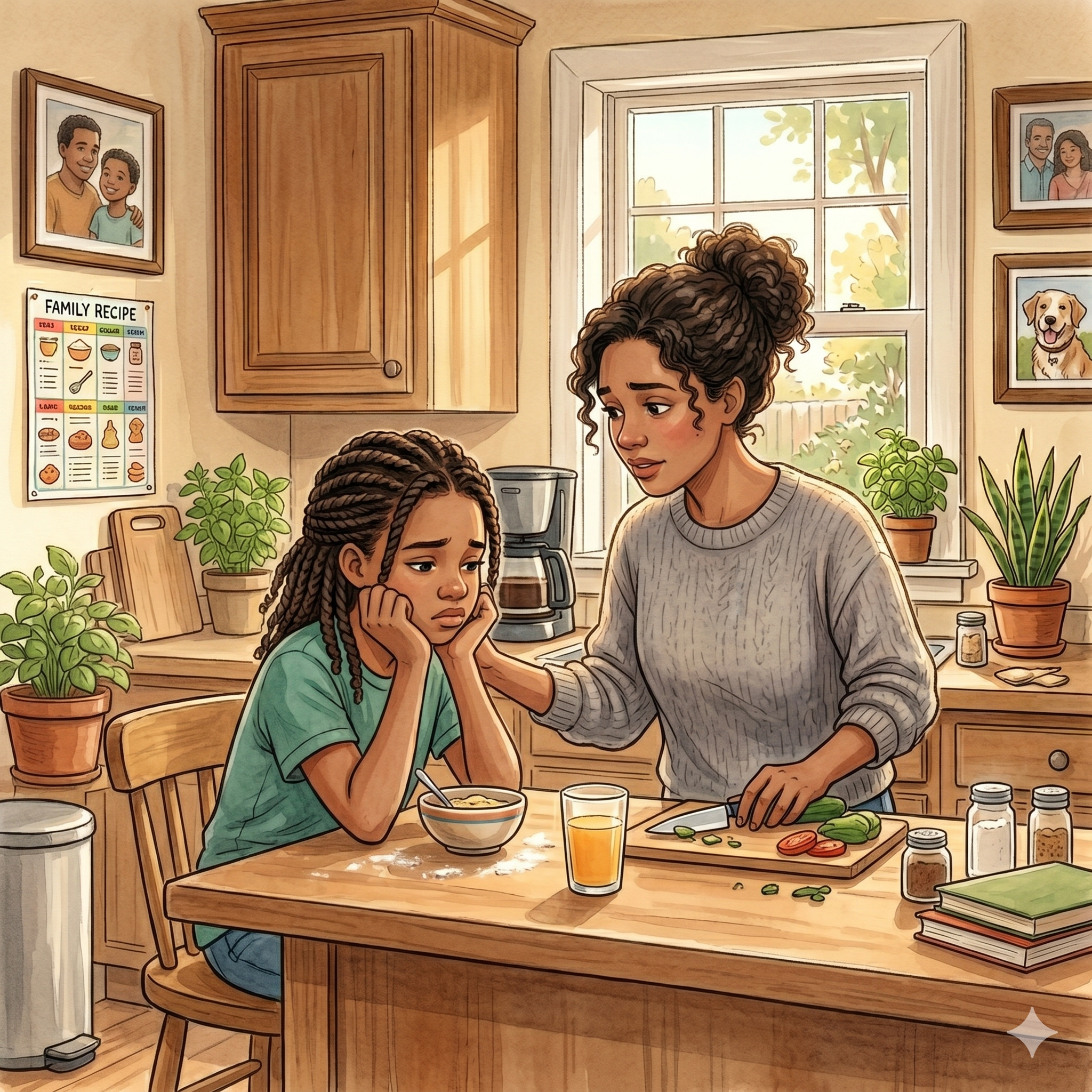
She drops her bag by the door and something is already off.
You can tell before she says a word. The way she moves through the kitchen. The way she answers your first question with as little as possible.
You ask what is wrong.
She says nothing.
You ask again, a little differently.
She says she is fine.
And then, maybe ten minutes later, maybe after dinner, maybe at 9:47 at night when you thought the day was done, it comes out. Something happened with a friend. Someone was left out. A group chat said something. Plans were made without her. A girl she trusted told someone else.
You want to fix it immediately.
You want to call someone, or say the thing that makes it hurt less, or solve the logistics of it before she goes to sleep.
And almost every time, that instinct, as loving as it is, is the wrong move.
Here is what actually helps.
Why Tween Friendship Drama Feels So Big
Before you can help her, it helps to understand why this hurts as much as it does.
For adults, friendships are one important part of a full life. There is work, partnership, family, history, community. When a friendship gets complicated, it is painful, but it sits alongside other things.
For a tween girl, friendship is almost everything.
Peer relationships at this age are where she is forming her identity. She is figuring out who she is by watching how people respond to her. She is learning what she values, what she will tolerate, what kind of person she wants to be, all of it through the lens of her friendships.
When something goes wrong in that space, it does not feel like a problem with one relationship.
It feels like a problem with herself.
That is why she cries harder than you expect. Why she cannot sleep. Why she replays the same conversation fifteen times looking for the moment it went wrong.
She is not being dramatic.
She is processing something that, at her stage of development, genuinely matters as much as it feels like it does.
The Moves That Seem Helpful But Are Not
Most parents default to one of a few approaches when their daughter brings home friendship trouble.
Each one comes from a good place. Each one tends to backfire.
Jumping straight to solutions.
"Just talk to her." "Ignore it." "Find other friends." "Here is what I would do."
She did not come to you for a strategy. She came to be heard. When you skip straight to solutions, she registers that her feelings were an inconvenience on the way to the answer.
Taking her side so hard that it becomes about you.
"I cannot believe she did that. That is so mean. I never liked how she treated you."
This feels like support. But when you go fully into battle mode, a few things happen. She sometimes pulls back, because now she is managing your reaction on top of her own. And if she and her friend reconcile tomorrow, which is very likely, she has to figure out how to walk back what she told you about someone you have now decided is the enemy.
Comparing it to your own experiences.
"When I was your age, the same thing happened to me, and here is what I did."
The intention is connection. The impact is often that the conversation shifts to you before she has finished saying what she needs to say.
Minimizing it.
"You will be fine. This stuff blows over."
That is probably true. But she is not ready to hear it yet, and saying it too soon tells her that you do not fully understand how much it hurts.
What to Do Instead
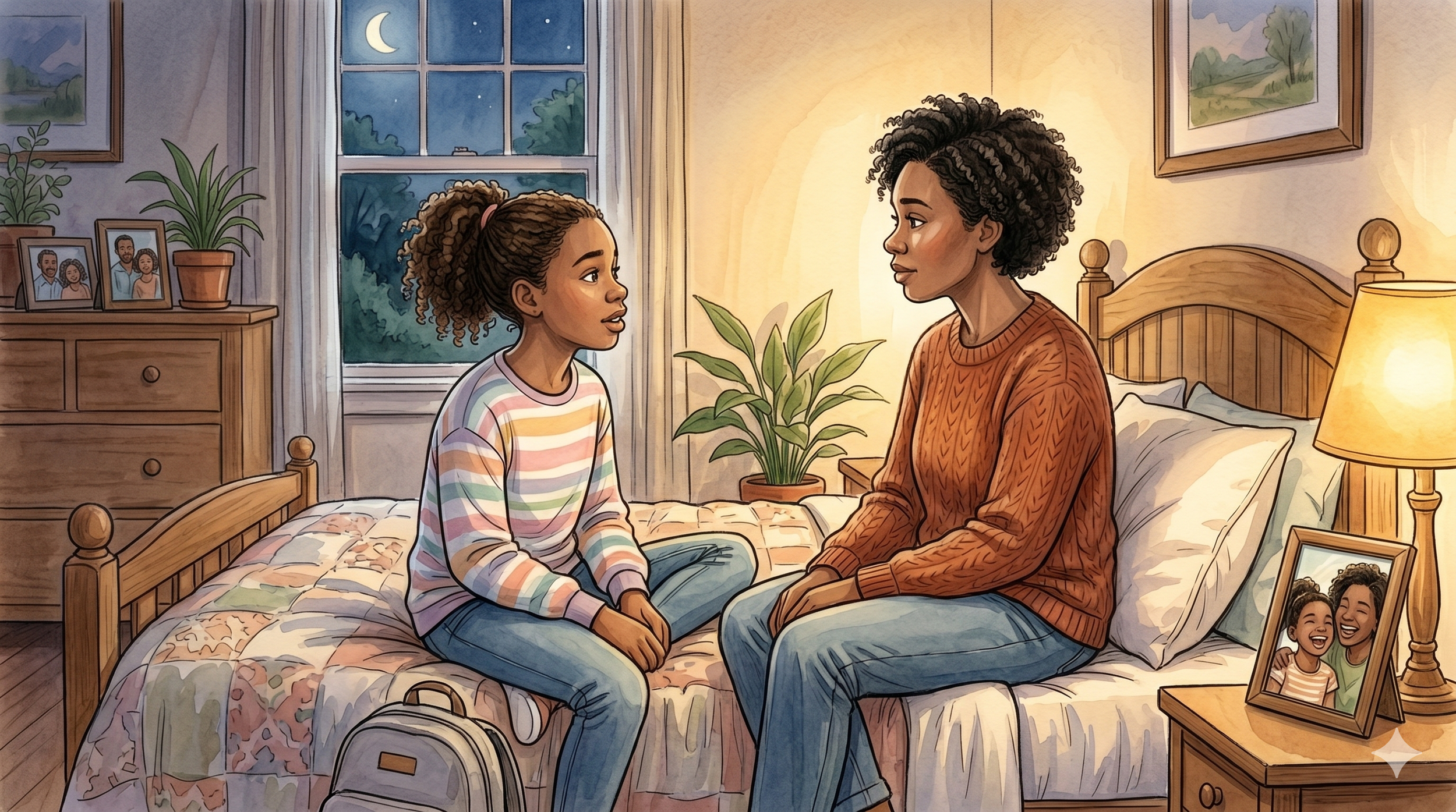
Start by just being there.
Not with questions. Not with advice. Just physically present and calm.
Sometimes you sit down next to her. Sometimes you make her something to eat without announcing it. Sometimes you just stay in the same room without filling the silence.
Let her lead the pace.
Ask one good question and then listen.
"Do you want to tell me what happened?"
That is it. No follow-ups stacked on top of each other. No clarifying questions before she has finished. One door opened, and then you wait for her to walk through it.
When she talks, listen in a way she can feel. Put your phone down. Make eye contact. Nod. Let her run out of words before you say anything.
Reflect before you respond.
When she finishes, before you say anything else, give back what you heard.
"So you found out that they made plans without you and no one said anything."
Not an interpretation. Not a judgment. Just a clean reflection of what she told you.
That reflection does something important. It tells her that you were actually listening, not just waiting for your turn. And it gives her a chance to correct you if you missed something.
Ask her what she needs before you offer anything.
This one is simple and most parents skip it entirely.
"Do you want me to just listen, or do you want to think through what to do about it?"
She might not know. That is fine. But asking gives her agency in a moment where she probably feels like she has none.
If she says she just wants to talk, honor that. Fully. Do not sneak advice in through the back door.
The Part Where You Have to Hold Back
There will be moments when what she describes sounds genuinely unkind.
A girl who used her confidence against her. A group that deliberately excluded her. A rumor that was not true but spread anyway.
Your protective instinct will be loud.
Here is the thing. Acting on that instinct, calling the school, messaging the other parent, doing something decisive, without asking her first, almost always makes it worse.
Not because the situation does not deserve a response. But because tween social dynamics move fast, and your involvement, however well-intentioned, changes the landscape in ways she will have to navigate long after you have moved on.
Before you do anything, ask her.
"Is this something you want my help with, or do you want to handle it yourself?"
"Would it help if I reached out to the school, or would that make things harder for you?"
She may say she wants you to step back. Respect that, unless what she is describing crosses into bullying or something that poses a real risk to her safety or wellbeing.
If it does cross that line, you step in. Clearly and without apology.
But you tell her first.
"I hear you that you want to handle this. And I am going to talk to the school anyway, because what you described is not okay and it is my job to make sure you are safe. I wanted you to know before I did it."
She might be frustrated. She will also know, somewhere under the frustration, that you take her seriously enough to act.
When It Keeps Coming Up
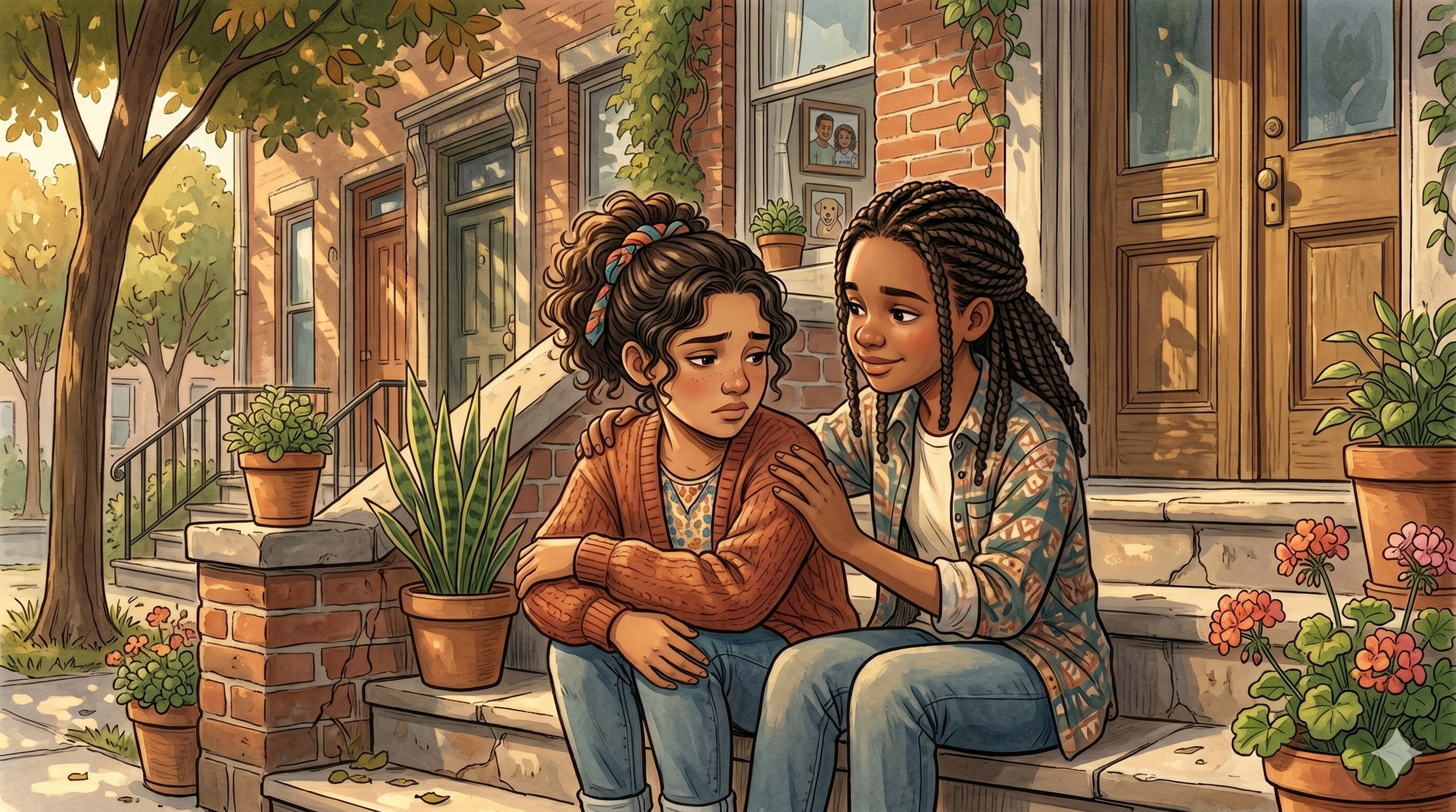
Some girls move through friendship trouble in waves. Something happens, it resolves, something else happens, and the cycle continues.
If your daughter is regularly coming home upset about the same friend, or the same group, that pattern is worth paying attention to.
Not every complicated friendship needs to end. Some of the most meaningful relationships involve real friction and real repair.
But if she is consistently leaving interactions with a specific person feeling worse about herself, smaller, more anxious, that is information.
You do not need to tell her who her friends should be.
You can ask questions that help her figure it out.
"How do you usually feel after you spend time with her?"
"Do you feel like yourself around that group, or like you are trying to keep up with something?"
"What do you like most about that friendship?"
You are not steering her toward an answer. You are helping her build the skill of evaluating her own relationships, which she will need for the rest of her life.
What She Is Learning From How You Handle This
Every time something goes wrong with her friends and she brings it to you, she is watching two things.
She is watching how you handle her feelings.
And she is watching how you model relationships.
If you stay calm when she is upset, she learns that emotions can be handled without chaos. If you listen before you advise, she learns that being heard matters more than being fixed. If you ask before you act, she learns that her autonomy deserves respect even when you disagree.
These are not small lessons.
They are the foundation of how she will handle her own relationships later. How she will treat her friends when they are struggling. How she will expect to be treated. How she will show up for the people she loves.
The friendship drama on a Tuesday night is the classroom.
You are one of the teachers.
You do not need to be perfect in it. You just need to stay present, keep your reactions proportionate, and let her know, again and again, that whatever happens out there, this is a safe place to land.
That is enough.
More than enough.